
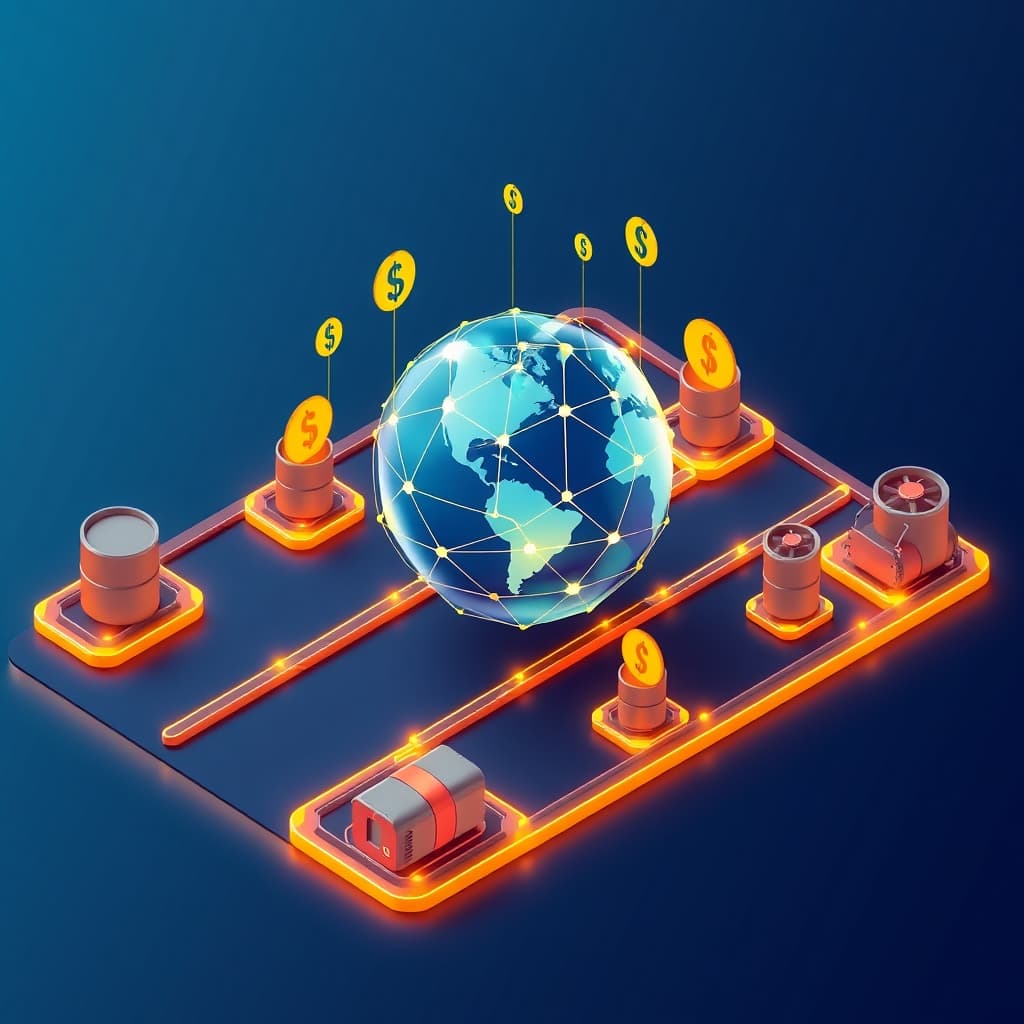
How Non-Dollar Commodity Rails Are Rewriting Global Energy Trade
Over 40 million financial messages traverse the SWIFT network daily, yet a growing coalition of sovereign states is deliberately absorbing the friction of abandoning this highly optimized system. The global financial plumbing is undergoing a silent but massive structural shift. Evaluating this from a macroeconomic and protocol-level framework, it is clear that nations are actively deploying sophisticated, non-dollar transaction networks. They are securing vital energy resources without triggering traditional compliance tripwires.
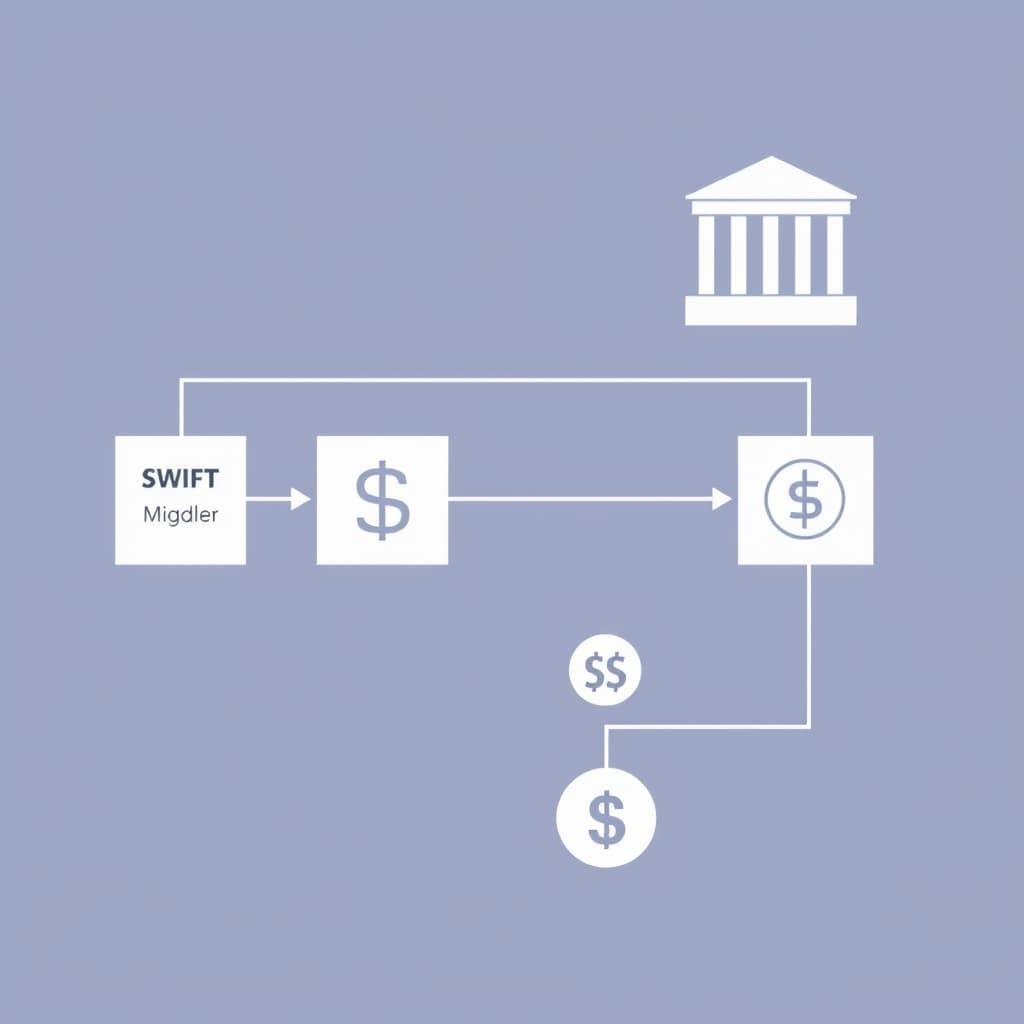
The monopolistic grip of legacy financial infrastructure is breaking. We are moving past theoretical de-dollarization into the operational realities of parallel commodity clearing houses.
The Architecture of Alternative Payment Networks
Local Currency Settlement Frameworks
The foundation of sanction-resistant trade relies on isolating capital flows from Western correspondent banks. This is achieved through closed-loop bilateral clearing systems. A prime example is the Reserve Bank of India's (RBI) Special Rupee Vostro Account (SRVA) framework, which was significantly streamlined in August 2025. By removing the requirement for prior central bank approval, foreign banks can now rapidly establish SRVAs with Indian Authorized Dealer (AD) banks. This architecture allows trade counterparties to invoice and settle entirely in local fiat, neutralizing the need for dollar liquidity.
Blockchain and Distributed Ledger Technology in Trade
Fiat escrow accounts are a temporary bridge; the permanent infrastructure relies on distributed ledger technology (DLT). The Bank for International Settlements (BIS) Project mBridge, which reached its Minimum Viable Product (MVP) stage in mid-2024, exemplifies this shift. mBridge utilizes a custom blockchain to facilitate real-time, peer-to-peer cross-border payments among participating central banks. Because the MVP platform is compatible with the Ethereum Virtual Machine (EVM), it supports programmable smart contracts for automated trade execution. This eliminates the T+2 settlement delay inherent in legacy correspondent banking and cryptographically shields transaction data from unilateral surveillance.
Decoding the India-Iran Oil Trade Matrix
Rupee-Rial Bilateral Clearing Mechanisms
Despite escalating geopolitical conflicts, India has successfully maintained its energy imports from Iran by operationalizing a highly effective bilateral clearing matrix. Since traditional payment channels were blocked, India has settled a significant portion of its Iranian oil obligations in rupees through UCO Bank in Kolkata. UCO Bank was strategically selected because it lacks US operations, insulating it from the immediate blast radius of secondary sanctions. Indian refiners deposit rupees into these accounts, which are then used to fund Iranian imports of Indian agricultural and pharmaceutical goods.
Circumventing the SWIFT Monopoly
This mechanism completely bypasses the SWIFT messaging network. By keeping the transaction ledger entirely within domestic jurisdictions, the trade remains invisible to foreign regulatory tripwires. When trade imbalances occur—such as India buying more oil than Iran buys goods—the excess rupees remain trapped in the Vostro accounts. To resolve this, adaptations have involved routing surplus capital through third-party central banks, such as the UAE, to convert balances into dirhams. This multi-hop settlement strategy proves that sovereign buyers will engineer complex workarounds to secure critical commodities.
De-Risking Sovereign Energy Security
Insulating Supply Chains from Geopolitical Shocks
Energy security is a matter of state survival. When the dominant financial system is weaponized, nations must decouple their physical supply chains from vulnerable financial chokepoints. The objective is to ensure that a sudden freeze of foreign exchange reserves or a SWIFT disconnection does not result in domestic power grid failures or fuel shortages.
The Erosion of Dollar Hegemony in Commodities
The transition away from petrodollars introduces severe operational trade-offs. Buyers and sellers must weigh the cost of capital efficiency against the risk of asset seizure.
A sovereign energy buyer in 2026 cannot choose all three options. They are forced to decide whether global liquidity or absolute sovereignty is their primary mandate.
The Next Generation of Decentralized Trade Finance
BRICS Pay and Multi-Polar Financial Infrastructure
The ad-hoc bilateral agreements of the early 2020s are rapidly formalizing into institutional consortia. BRICS Pay is developing a Decentralized Cross-border Messaging System (DCMS), engineered to operate transparently without a central owner or hub. Nodes are managed independently by participating states, making the network structurally resistant to external interference.
Targeting pilot deployments by the end of 2026, this framework is designed to process high-volume commodity trades using a basket of local currencies rather than a single reserve asset.
Regulatory Arbitrage in the Digital Age
The integration of Central Bank Digital Currencies (CBDCs) introduces a new vector for regulatory arbitrage. By encoding jurisdiction-specific compliance rules directly into the token's smart contract, states can automatically execute trades that satisfy local laws while ignoring foreign mandates. This programmable money infrastructure neutralizes the legal reach of extraterritorial sanctions, allowing nations to conduct energy trade in a cryptographically secure, parallel financial universe.
The 24-Month Outlook on Global Settlement
The monopolistic grip of legacy financial infrastructure is breaking as nations prioritize energy security over conventional compliance. Watch for increased integration of central bank digital currencies into these bilateral trade corridors over the next 24 months. The plumbing of global trade has fundamentally fractured, and the premium on sanction-resistant clearing mechanisms will only accelerate.
Frequently Asked Questions
How do alternative commodity rails bypass traditional banking compliance?
They utilize closed-loop bilateral clearing systems, local currency swaps, and digital ledger technologies that operate entirely outside the jurisdiction of Western correspondent banking networks.
What role do Central Bank Digital Currencies (CBDCs) play in these new trade architectures?
CBDCs provide instantaneous, peer-to-peer cross-border settlement capabilities, eliminating the need for intermediary banks and neutralizing the threat of secondary sanctions.
Sources
Related
View all →