

Compute-Memory Shock: Why Valve’s Delay Signals a Hardware Price Spike
When the yield rate on a 1β (1-beta) process node drops below 60%, the mathematics of semiconductor manufacturing force a triage decision. In previous cycles, this meant delaying a specific product line. In the current market, however, a sub-optimal yield combined with aggressive wafer allocation for Enterprise AI has created a zero-sum environment. Valve’s sudden postponement of its next-generation Steam Machine is not merely a production hiccup; it is the first verifiable signal of a systemic fracture in the memory supply chain—a "Compute-Memory Supply Shock."
This analysis evaluates the collision between low yields on next-gen nodes and insatiable demand for HBM (High Bandwidth Memory), creating a vacuum for consumer-grade high-performance components. We look at the unit economics forcing Valve’s hand and the inevitable pricing ripple effects for 2026.
The GDDR7 and HBM Bottleneck: Where Manufacturing Hit a Wall
The core of this crisis lies in the physical limitations of the manufacturing floor. While consumer attention is often on the GPU core, the bottleneck has shifted to the memory modules required to feed those cores.
Yield Rate Failures at the 1β Process Node
The transition to the 1β DRAM process node was intended to improve power efficiency by 15% and density by 35%. However, recent industry reports indicate that effective yields for high-speed variants (essential for GDDR7) have stalled. Unlike standard DDR5, which can tolerate higher latency, the memory required for next-gen gaming hardware demands pristine silicon.
When yields are low, the cost per viable die skyrockets. In a normal market, manufacturers would simply eat the cost or delay slightly. Today, foundries are choosing not to fix the GDDR lines but to retool them.
How Enterprise AI Accelerators Cannibalize Production
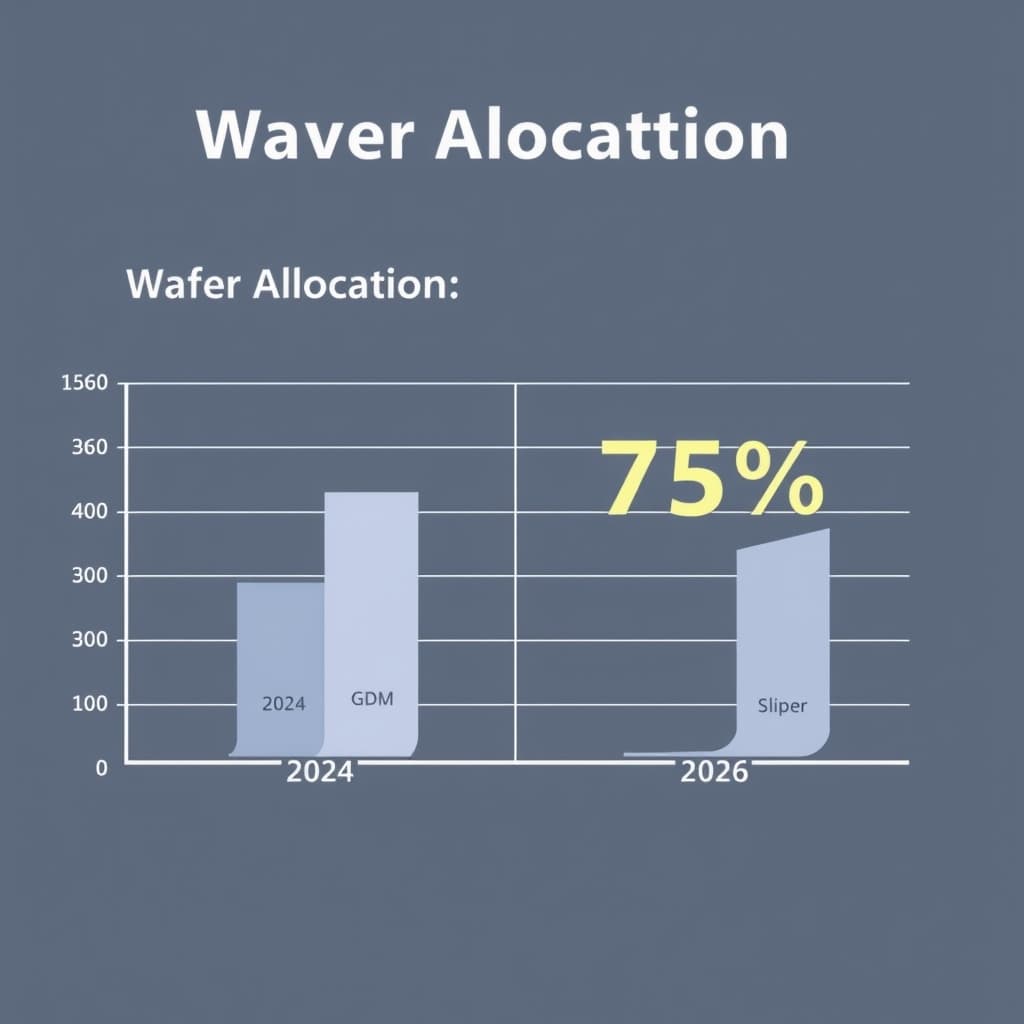
The foundry logic is purely arithmetic. A 12-layer HBM3E stack commands a margin premium of approximately 400-500% over a standard GDDR7 module. With major hyperscalers (Microsoft, Google, Meta) placing uncancellable orders for AI accelerators through 2027, DRAM manufacturers like SK Hynix, Samsung, and Micron have shifted their limited advanced packaging capacity (CoWoS) toward HBM.
This leaves the consumer graphics sector fighting for scraps. The production lines that would historically churn out VRAM for consoles and GPUs are being repurposed for enterprise memory, creating a physical scarcity that no amount of consumer demand can resolve in the short term.
Valve’s Strategic Retreat: Parsing the 'RAM Crisis' Statement
Valve’s public acknowledgment of a "RAM crisis" is rare transparency in an industry that usually blames "polishing" for delays. This suggests the hardware architecture hit a hard limit regarding Bill of Materials (BOM) viability.
Architecture vs. Memory Specifications
The Steam Machine’s architecture likely relies on a Unified Memory Architecture (UMA), similar to the Steam Deck but scaled for higher fidelity. This design is exceptionally sensitive to memory bandwidth. Downgrading from the planned GDDR7 or high-spec LPDDR5X to standard LPDDR5 would cut manufacturing costs, but it would slash memory bandwidth by roughly 30-40%. For a device targeting 4K living room gaming, that performance penalty renders the product non-competitive against existing consoles.
The Unit Economics of Delay
Valve faced a critical trade-off. Releasing on time would require bidding against NVIDIA and AMD for the limited supply of high-performance RAM, potentially raising the BOM by $80-$120 per unit.
The following table outlines the decision matrix Valve likely navigated:
Valve chose the third option, signaling that they believe component prices will stabilize—or that they simply cannot pass the current costs onto the consumer.
Hardware Inflation: The Inevitable Price Creep for 2026
Valve is the canary in the coal mine. The same supply constraints affecting the Steam Machine apply to every piece of consumer electronics relying on discrete graphics memory.
Projected MSRP Adjustments
We are adjusting our pricing models for the 2026 hardware cycle. Consumers should anticipate a "spec-flation" scenario where price points remain static, but hardware specifications stagnate, or distinct price hikes occur:
- Mid-Range GPUs: The successor to the current 60/70-class cards will likely see a $50-$100 MSRP increase, justified by "AI capabilities" but necessitated by VRAM costs.
- Gaming Laptops: Expect a 15-20% price increase for models featuring >16GB of VRAM.
- SSD Pricing: As NAND and DRAM production lines are often shared or correlated in CAPEX planning, storage prices are likely to drift upward by 15% in Q2 2026.
Inventory Hoarding by Major OEMs
Supply chain data suggests that Tier-1 OEMs (Dell, Asus, Lenovo) have initiated inventory accumulation strategies, effectively hoarding available GDDR6X and early GDDR7 stock. This defensive buying exacerbates the scarcity for smaller players and standalone component buyers. This "Bullwhip Effect" means that even if production yields improve slightly, the inventory will not reach the open market immediately, as major integrators refill their safety stock.
Scaling Walls and CXL: The Technical Roadmap to Recovery
Is there a technological relief valve? The industry is pinning long-term hopes on Compute Express Link (CXL), but it offers no immediate salvation for the consumer market.
The Role of CXL in Bandwidth Relief
CXL allows for memory pooling and expansion, theoretically decoupling memory capacity from the main processor. In the enterprise sector, this reduces the pressure to over-provision HBM. If servers can offload some tasks to CXL-attached memory, it could free up some wafer capacity.
Timeline for Capacity Expansion
However, the roadmap for CXL adoption is strictly server-first. Consumer platforms (motherboards and CPUs) lack the necessary interconnects to utilize CXL. Realistically, the "trickle-down" effect of CXL relieving pressure on the DRAM supply chain will not be felt until late 2026 or early 2027.
Until then, the only fix is raw capacity expansion. Samsung and SK Hynix have announced new fabs, but these facilities take 18-24 months to come online. We are currently in the trough of the cycle where demand has outpaced physical infrastructure.
What Would Change My Mind?
This bearish outlook relies on the persistence of low yields at the 1β node and sustained, exponential growth in AI inference demand. If foundries achieve a sudden breakthrough in yield stabilization (jumping from 60% to 90% in a single quarter), or if the "AI Bubble" sees a sharp correction that leads to order cancellations from hyperscalers, the memory market could flip to oversupply within three months. Under those conditions, spot prices for GDDR would crash, and hardware pricing would normalize rapidly.
Conclusion
The delay of Valve’s flagship hardware is not an isolated event; it is a symptom of a hardware ecosystem currently prioritized for enterprise AI over consumer entertainment. The convergence of manufacturing difficulties and the profitability gap between HBM and GDDR has left the consumer market exposed. For the next 12 to 18 months, PC builders and gamers should expect a market defined by scarcity, stagnant specifications, and climbing prices.
FAQ
Why is the memory shortage affecting gaming devices specifically? Gaming devices rely on high-bandwidth memory (GDDR) which requires the same advanced manufacturing nodes and packaging facilities as enterprise AI memory (HBM). Because manufacturers make significantly higher profits on AI components, they are allocating the vast majority of their production capacity to enterprise contracts, leaving fewer production slots for gaming-grade RAM.
Will this supply shock delay other consoles or GPUs in 2026? Yes. While Valve was the first to announce a public delay, we anticipate "silent delays"—where products are announced but suffer from immediate low stock and paper launches—for the next generation of NVIDIA and AMD graphics cards.
Sources
Related
View all →