


Cross-Border Ethical Partitioning: The Strategic Balkanization of Big Tech
The unitary multinational corporation is a relic. We are witnessing the end of the "one world, one strategy" doctrine that defined the last three decades of tech expansion. With Capgemini’s 2026 divestiture of its US federal arm serving as the industrial bellwether, we have entered the age of Cross-Border Ethical Partitioning.
This isn't standard corporate restructuring. It is the deliberate, strategic fracturing of corporate entities to firewall parent valuations from jurisdictional moral hazards. For ten years, I’ve analyzed the friction between compliance and profitability, but the current landscape is different. We are no longer talking about localized marketing; we are talking about legal and operational amputation to survive conflicting regulatory regimes.
When a French holding company can no longer absorb the reputational radioactive decay of a US defense contract without crashing its ESG rating in Amsterdam, the only move left is to split. Cross-Border Ethical Partitioning is the mechanism by which firms monetize conflicting values by selling "security" to Washington and "sustainability" to Brussels, ensuring neither buyer sees the other’s ledger.
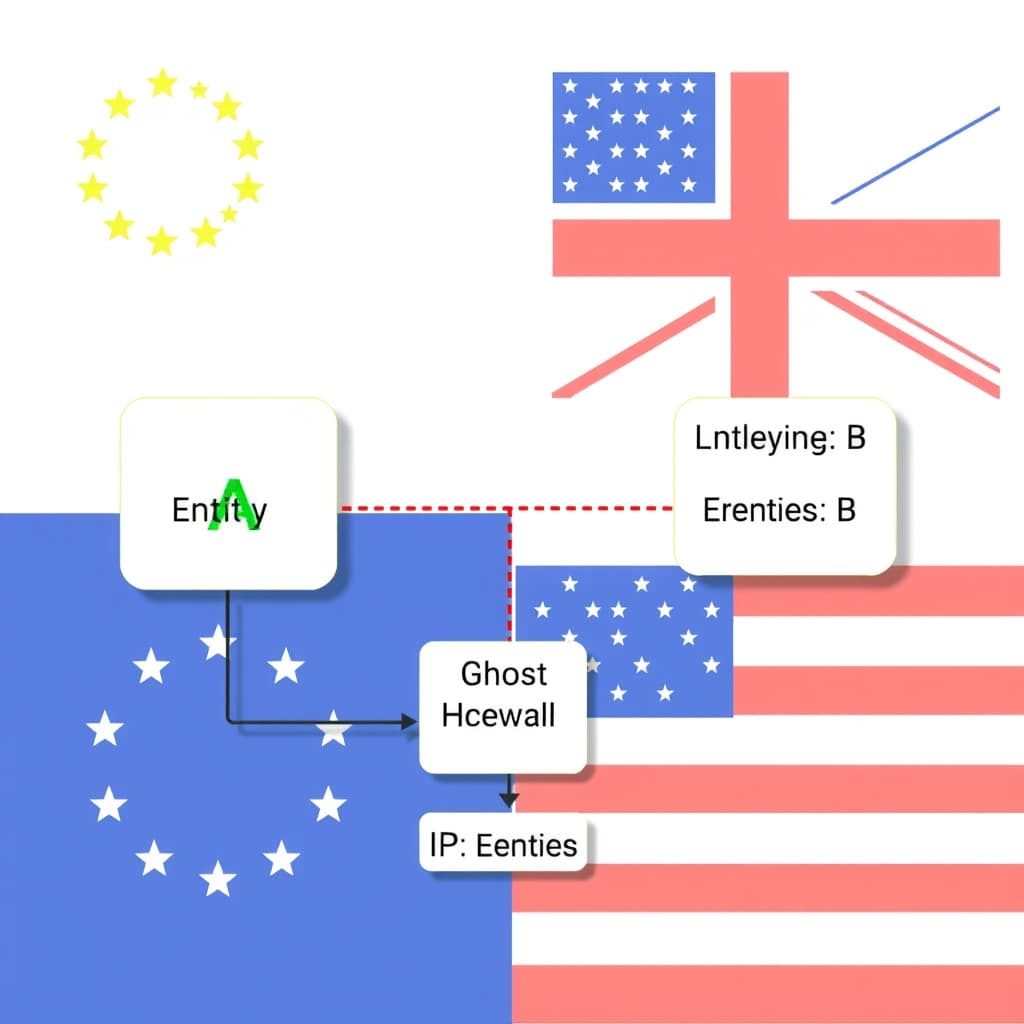
The visual above maps the financial circulatory system of this new era. Notice that while operational liability is severed—preventing a lawsuit in the EU from targeting assets in the US—the capital flows remain intact via intellectual property licensing. This is the "Contagion Firewall." It allows the parent company to claim it has no direct involvement in the controversial activities of the spun-off entity, satisfying the OECD Guidelines for Multinational Enterprises regarding responsible business conduct, while still capturing the revenue through royalty fees rather than direct operational profit. It is a distinction without a difference to the wallet, but a world of difference to the regulator.
The Mechanics of Cross-Border Ethical Partitioning
The naive view is that companies split to "focus on core competencies." That’s the press release version. The reality is that Cross-Border Ethical Partitioning is a defensive maneuver against the weaponization of ESG (Environmental, Social, and Governance) metrics.
Beyond Subsidiaries: The Legal Firewall
For years, the standard playbook was the wholly-owned subsidiary. You create "TechCorp Government Solutions," put a separate board in place, and hope the public ignores the connection to the parent brand. That model collapsed in 2024. Activist shareholders and sophisticated NGOs learned to pierce the corporate veil, holding parent companies vicariously liable for the sins of their subsidiaries.
Cross-Border Ethical Partitioning goes further. It involves the creation of entirely distinct legal entities where the parent company retains zero voting rights and zero operational control, often holding only a passive economic interest or a licensing agreement. This structure is specifically designed to defeat the "control" test used by regulators. If the European Commission asks, "Do you control the entity building autonomous drones for the US border?" the parent can legally answer "No," shielding itself from penalties under strict EU supply chain laws.
Cross-Border Ethical Partitioning and Valuation Defense
Here is the financial logic that creates the imperative. In the current market, a dollar earned from a "sustainable" cloud contract in Germany is valued at a higher multiple (e.g., 25x P/E) than a dollar earned from a "controversial" defense contract in Virginia (e.g., 12x P/E).
When these revenue streams are mixed in a single conglomerate, the lower multiple drags down the aggregate valuation—a "conglomerate discount" exacerbated by ethical risk. By executing Cross-Border Ethical Partitioning, the firm liberates the EU entity to trade at a premium ESG multiple while the US entity attracts a different class of investor: those seeking defense-sector stability and indifference to social governance metrics. The split doesn't just reduce risk; it mathematically expands the total market capitalization of the original assets.
Cross-Border Ethical Partitioning as Protectionism
We must stop pretending this is purely about ethics. It is trade protectionism disguised as moral compliance. The regulatory environments in the US and the EU have drifted so far apart that they effectively function as non-tariff trade barriers, forcing this balkanization.
The Compliance Moat: EU CSDDD vs. US FAR
The friction point lies between two massive regulatory frameworks: the EU's Corporate Sustainability Due Diligence Directive (CSDDD) and the US Federal Acquisition Regulation (FAR).
The CSDDD mandates that companies identify and mitigate human rights risks across their entire chain of activities. Conversely, the US FAR prioritizes performance, security, and "Buy American" mandates, often penalizing contractors that restrict service availability based on external "social" criteria (anti-boycott provisions).
You cannot comply with both simultaneously as a unitary entity. If you enforce CSDDD strictures on your US defense subsidiary, you may violate the terms of your US government contract or face "woke capital" blacklisting in red states. If you ignore CSDDD to satisfy the Pentagon, you face fines of up to 5% of global turnover in Europe.
Cross-Border Ethical Partitioning solves this by breaking the chain of activity.
This table illustrates why the split is inevitable. The US Federal Acquisition Regulation effectively demands a level of sovereign loyalty that the EU CSDDD defines as a liability risk.
Moral Arbitrage in Cross-Border Ethical Partitioning
The uncomfortable part is that this partitioning allows companies to engage in "Moral Arbitrage." They are not reducing harm; they are merely compartmentalizing it.
By severing the US defense arm, the European parent company gets to scrub its hands clean. It produces a sustainability report that looks pristine, devoid of any involvement in lethal autonomy or border surveillance. Meanwhile, the newly independent US entity doubles down on those exact contracts, free from the "ethical drag" of European oversight. The net amount of "controversial" work in the world hasn't decreased—it has arguably increased because the US entity is now unshackled.
Cross-Border Ethical Partitioning allows capital to flow to the highest return, regardless of the moral cost, by creating bespoke investment vehicles for every shade of ethical appetite.
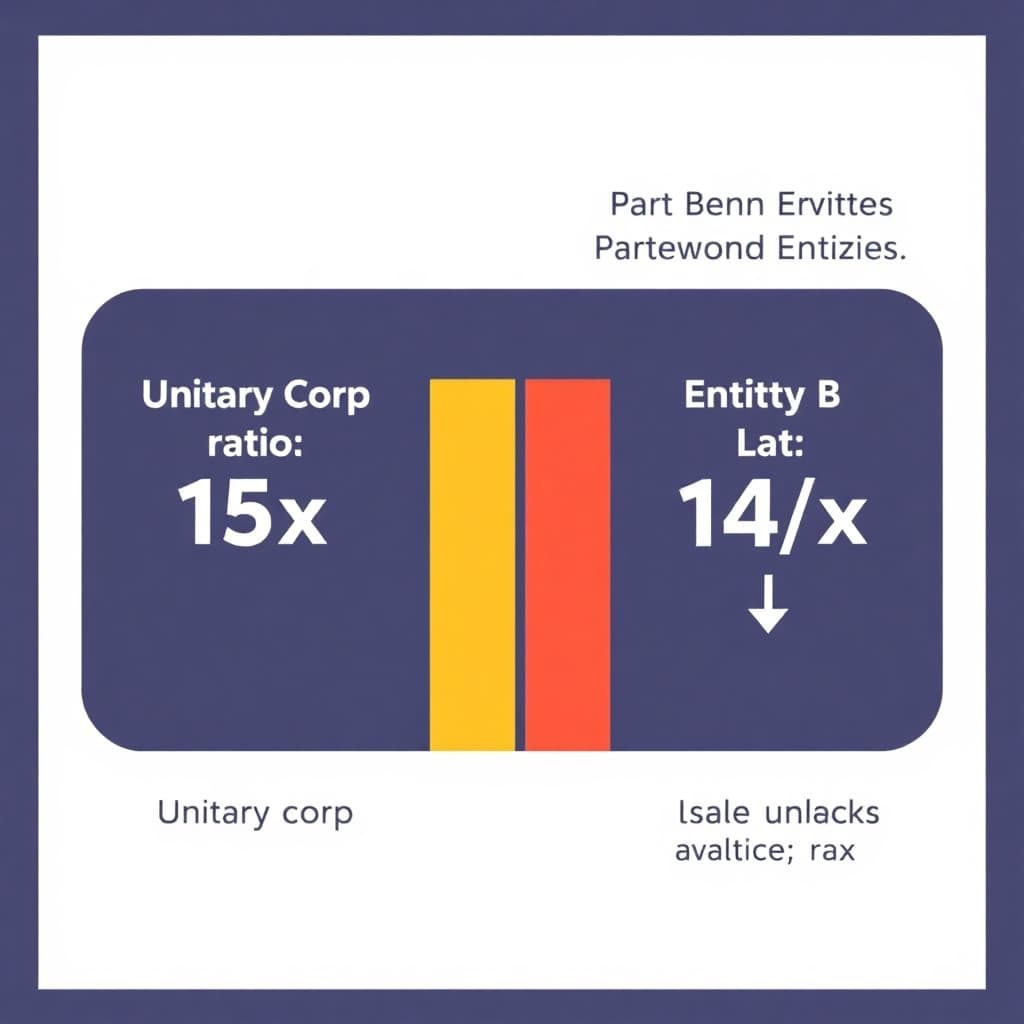
The visual above demonstrates the "Purification Premium." By removing the "ethical discount" from the parent company, shareholders realize immediate value, even if the underlying operational reality of the technology (e.g., AI code shared between entities) remains largely unchanged.
Case Study: The 2026 Capgemini Pivot
The recent Capgemini divestiture provides the perfect autopsy of this trend. While the press focused on the political backlash regarding US immigration enforcement (ICE) contracts, the structural mechanics reveal the future of the industry.
Anatomy of the Split
Capgemini didn't just sell the unit; they spun it out into a "Federated Defense Prime." The new entity, "CapGov US," is legally domiciled in Delaware with a board composed entirely of US citizens holding security clearances. Crucially, Capgemini retained a "special share" that grants rights to IP royalties but explicitly forbids influence over customer selection.
This was a masterclass in Cross-Border Ethical Partitioning. It allowed Capgemini to respond to the European Commission's strict stance on corporate due diligence by proving they had no power to stop the ICE contracts, thereby avoiding EU penalties. Simultaneously, "CapGov US" assured the Department of Homeland Security that no foreign entity could veto their mission support.
Market Reaction
The immediate aftermath saw a 4% drop in top-line revenue for the parent group. However, within two quarters, the stock price rallied 12%. Why? Because ESG funds that had previously blacklisted the stock due to "controversial weapons/border enforcement" exposure were forced to buy back in. The "purified" metrics allowed the stock to re-enter major sustainability indices. The revenue lost was more than compensated by the multiple expansion—a textbook validation of the partitioning strategy.
Industrial Outlook: The Federated Giant
Looking toward 2030, the era of the monolithic tech giant is ending. We are moving toward a "Federated" model where brand unity is an illusion masking a fragmented legal reality.
The Rise of Ghost Holding Companies
We will see the emergence of "Ghost Holding Companies." These entities will own nothing but intellectual property and brand trademarks. They will license these assets to a constellation of regionally autonomous operators.
The Ghost Holding Company will sit in a neutral jurisdiction (likely Singapore or Switzerland), collecting royalties. The "EU Operator" will be fully CSDDD compliant. The "US Operator" will be fully FAR compliant. The "China Operator" will comply with local data security laws. None of these operators will legally own the others. Cross-Border Ethical Partitioning will evolve from a crisis response into the default architectural standard for multinational business.
CIO Strategy for Fragmented Stacks
For the Chief Information Officer (CIO), this is a nightmare scenario. The assumption that a contract with "BigTech Global" covers your operations in both Frankfurt and New York is dead.
CIOs must prepare for fragmented tech stacks. If your cloud provider executes a Cross-Border Ethical Partitioning maneuver, you may find that your US data is hosted by an entity that is legally distinct from the entity hosting your EU data, with no automatic transfer mechanisms or shared liability coverage. You are no longer buying a global platform; you are buying a federation of local services that look like a global platform.
Start auditing your vendor contracts now for "change of control" clauses. If your vendor splits, do you have the right to terminate? Or are you stuck with the "bad bank" version of the company you hired?
Conclusion
The unitary multinational was a creature of a low-friction world. That world is gone. Cross-Border Ethical Partitioning is the corporate antibody response to the virus of geopolitical fragmentation. It creates a complex, federated future where capital flows freely, but liability and brand equity are strictly bordered.
For the investor, the alpha lies in identifying which companies are preparing to split before the market prices in the "purification premium." For the regulator, the challenge is chasing ghosts—trying to enforce global ethics on a corporate structure designed specifically to be everywhere and nowhere at once. The map is not the territory, and in 2026, the brand is not the company.
FAQ
What is Cross-Border Ethical Partitioning? It is a corporate restructuring strategy where a multinational fractures into legally distinct entities to isolate specific regional operations that may conflict with ethical or political mandates in the parent company's home jurisdiction.
How does this affect shareholder value? While it increases operational overhead, it preserves shareholder value by preventing "reputational contagion." A controversy in a US defense contract, for example, is legally and optically walled off from the European parent company's ESG rating, often leading to a higher stock valuation (P/E expansion).
Is this legal under international law? Yes, generally. It leverages the principle of corporate separateness. However, regulators are increasingly scrutinizing "shadow control," where a parent company claims independence but exerts informal pressure.
How does this differ from a standard spin-off? A standard spin-off is usually about financial focus or antitrust. Cross-Border Ethical Partitioning is specifically driven by the need to navigate conflicting moral or geopolitical regulatory regimes (e.g., EU human rights laws vs. US defense requirements).
Sources
Related
View all →