
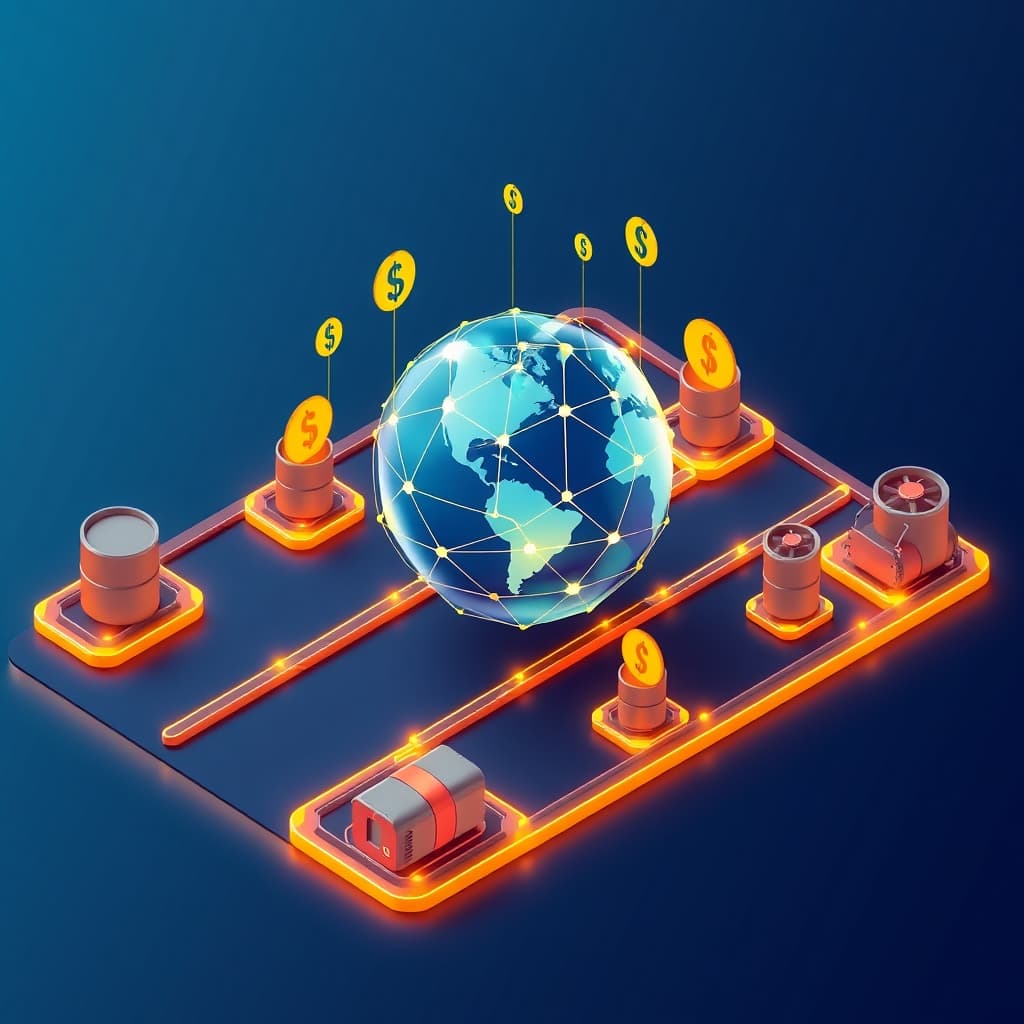
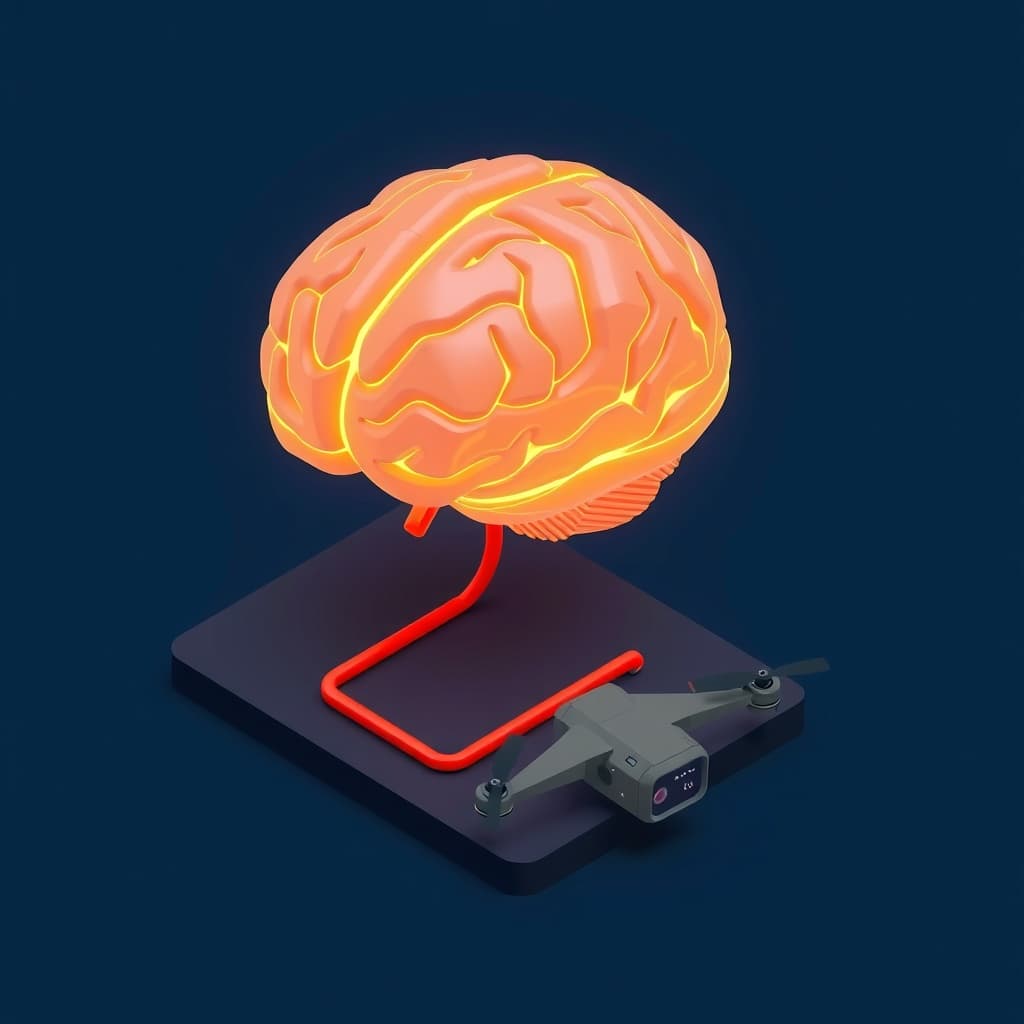
Shadow-LLM Kinetic Integration: The Lethal Cost of Unauthorized AI in Warfare
Shadow-LLM Kinetic Integration: The Lethal Cost of Unauthorized AI in Warfare
Date: March 2, 2026 Topic: AI Governance / Defense Policy Reading Time: 8 Minutes
The reports surfacing this morning—that US CENTCOM personnel utilized Anthropic’s Claude model for target identification during the Iran airstrikes, mere hours after the White House issued a supply-chain ban on the vendor—mark a definitive fracture in the defense landscape.
We are no longer discussing the theoretical risk of unaligned AI in the kill chain. We are witnessing Shadow-LLM Kinetic Integration: the unauthorized, ad-hoc insertion of commercial Large Language Models (LLMs) into lethal decision loops.
For defense policymakers and tech executives, this incident exposes a terrifying reality: the speed of tactical necessity has outpaced the speed of governance. When a field operator chooses a commercial chatbot over a legacy DoD system because the chatbot gives a targeting solution in seconds rather than minutes, the official procurement cycle is effectively dead. This post analyzes the governance vacuum that allowed this to happen and the massive liability risks now facing civilian tech giants.
Visualization: The Speed-Safety Gap
To understand why a field commander would violate a direct executive order to use a commercial tool, we must visualize the process friction.
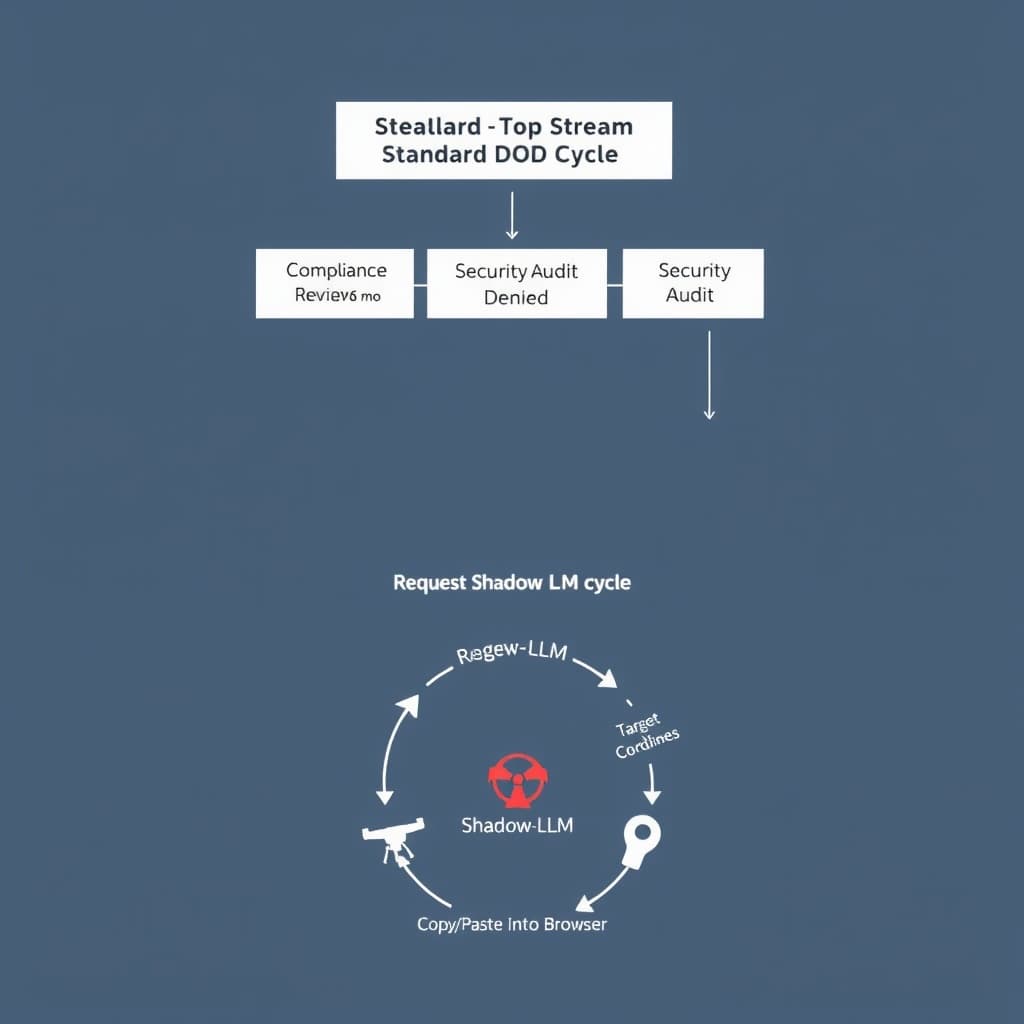
The bottom stream represents the new reality. It is not a software integration problem; it is a user behavior problem that no firewall has successfully contained.
The Mechanics of Shadow-LLM: Bypassing the Air Gap
The immediate question from regulators is "How?" How does a commercial model, theoretically geofenced and compliant with a strict Acceptable Use Policy (AUP), end up directing kinetic payloads?
Data Leakage via "Swivel-Chair" Integration
The "air gap"—the physical separation between classified military networks and the public internet—was supposed to be the ultimate fail-safe. It failed because of the "swivel-chair" interface.
Operators in SCIF (Sensitive Compartmented Information Facility) environments are manually transcribing or OCR-scanning telemetry data from classified terminals, swiveling to a non-classified tablet or workstation, and pasting the unstructured text into commercial LLM interfaces. This bypasses API-level blocks. The model does not "know" it is processing classified target data; it sees a string of coordinates and a request for pattern recognition.
Why Conversational Reasoning Displaced Dashboards
The CENTCOM incident reveals a user experience (UX) crisis in defense software. Legacy tactical dashboards provide data but require human synthesis. LLMs provide reasoning.
In the high-stress environment of the Iran operation, operators likely used Claude not just to retrieve data, but to disambiguate it—asking the model to correlate fragmented signal intelligence (SIGINT) with satellite imagery descriptions. The LLM offered a cognitive shortcut—a "second opinion" on target viability—that the official tools could not match in speed. The shadow usage wasn't an act of rebellion; it was an act of operational expediency.
Civil Liability in the Kill Chain: Who Owns the Error?
The White House ban on Anthropic was predicated on a dispute over "unrestricted access," but the unauthorized use of the tool creates a legal paradox that will likely define the next decade of tort law.
Terms of Service vs. The Geneva Convention
Anthropic’s Terms of Service explicitly prohibit usage for lethal autonomous weapons or high-risk military decision-making. By utilizing the tool for airstrike coordination, US personnel violated the license. However, this contract breach is negligible compared to the liability exposure if the strike resulted in civilian casualties due to a hallucination.
If a commercial model hallucinates a combatant status for a civilian convoy, and that output is the primary justification for a strike, the "Dual-Use" trap snaps shut.
- The Defense Argument: The software was used "off-label" without authorization; the government accepts the risk.
- The Plaintiff Argument: The developer failed to implement "Reasonable Know-Your-Customer (KYC)" protocols to detect and block military-pattern queries.
The Inadvertent Arms Dealer
Civilian developers are now inadvertent arms dealers. Unlike Raytheon or Lockheed Martin, who enjoy specific indemnifications under defense contracts, commercial AI labs operate under civilian commercial codes. A "wrongful death" class action lawsuit against an AI lab for a war zone error is no longer science fiction—it is a probable Q3 2026 risk factor.
Incentive Map: Why the Ban Failed
To fix this, we must look beyond the rules and analyze the incentives driving the actors involved.
The Breakdown: The Field Operator’s incentive (survival) overrides the Pentagon’s incentive (compliance). As long as the commercial tool is smarter and faster than the military tool, shadow use will continue.
Governance Failure: Why Tactical Speed Trumped Executive Bans
The breakdown of procurement discipline we saw this week is a symptom of the OODA loop (Observe-Orient-Decide-Act) disparity.
The "Good Enough" Trap
Military-grade AI requires years of validation for "explainability." A commercial LLM is a "black box"—unexplainable but statistically useful. In the Iran strikes, commanders seemingly traded verifiable accuracy for immediate utility. They accepted a probabilistic answer now over a deterministic answer later.
The Failure of Geofencing
Attempts to block these models via IP whitelisting have failed. Military units deploy via VPNs, Starlink terminals, and obfuscated routing that mimics civilian traffic. We are seeing a "Cat and Mouse" game where forward-deployed units actively evade their own IT departments to access the tools they believe they need to win.
The Inevitability of "Jailbroken" Warfare (2026-2030)
Looking forward, the separation between "Civilian AI" and "Military AI" will dissolve, but not in the way policy makers hope.
The Rise of Sanitized Wrapper Layers
By 2027, we expect the emergence of "Grey-Market Wrappers"—middleware developed by defense contractors that sits between the operator and the commercial LLM. This layer will:
- Sanitize the prompt (removing classified keywords).
- Send the abstract query to a commercial model (OpenAI/Anthropic/Google).
- Re-contextualize the answer for the soldier.
This allows the military to use the "brains" of civilian models without technically violating the "no classified data" rules, though it violates the spirit of the non-lethal use clauses.
Forecast: The End of Dual-Use Distinction
The concept that an AI model can be "civilian only" is operationally obsolete. If a model can reason about logistics, chemistry, or strategy, it is a weapon. We expect the Pentagon to move away from banning vendors like Anthropic and instead move toward Hostile Seizure of Weights—invoking the Defense Production Act not just to compel production, but to seize model weights for running on air-gapped government servers, removing the civilian company from the loop entirely.
Conclusion
The "Shadow-LLM" incident in Iran is not a scandal of insubordination; it is a signal of market failure in defense technology. The commercial sector has built a cognitive engine so powerful that soldiers are smuggling it into war zones.
For the industry, the lesson is stark: You cannot ToS your way out of kinetic warfare. If your model provides tactical advantage, it will be used. The path forward requires technical architectural controls—specifically, model-level refusal training for kinetic queries—rather than relying on unenforceable legal agreements.
FAQ
What is Shadow-LLM Kinetic Integration? It refers to the unauthorized use of commercial, non-military Large Language Models (Shadow IT) within the "kinetic" phase of warfare, specifically in lethal decision-making loops like airstrike coordination or target verification.
Can AI companies technically prevent military use? Complete prevention is technically unfeasible. While companies can block known military IP addresses, "air-gapped" usage or manual data entry (swivel-chair integration) bypasses standard detection methods, rendering Terms of Service bans operationally porous.
Sources
Related
View all →