


The Great Replatforming: Why LSEG’s Blockchain Pivot Signals the End of T+2 Settlement
When the London Stock Exchange Group (LSEG) announced plans to launch a fully digital market business, it wasn't a PR stunt to ride the crypto-winter thaw. It was a calculated admission that the current clearing and settlement architecture—a Rube Goldberg machine of messaging protocols and reconciled ledgers—is approaching its functional limit. LSEG is not merely experimenting with asset tokenization; they are fundamentally restructuring the plumbing of global finance to eliminate the counterparty risk that necessitates T+2 (and even the US’s recent T+1) settlement cycles.
This shift marks the transition from Legacy Market Infrastructure On-Chaining—where we simply wrap digital receipts around archaic processes—to true replatforming. For venture investors and market structure analysts, the signal is clear: the value proposition has moved from the asset layer (tokenizing real estate or art) to the settlement layer, where trillions of dollars in collateral sit trapped in transit.
Rewiring the Plumbing: From Centralized Clearing to Atomic Settlement
The current financial stack is built on messaging, not shared state. When a trade occurs today, it triggers a cascade of messages (SWIFT, FIX) between custodians, central securities depositories (CSDs), and clearing houses. Each entity maintains its own ledger, and these ledgers must be reconciled manually or via batch processes overnight. This reconciliation gap is where risk lives, and it is expensive.
LSEG’s pivot acknowledges that blockchain’s primary utility in regulated markets is not decentralization, but the creation of a "Golden Record"—a single, shared source of truth that renders reconciliation obsolete.
Eliminating the Reconciliation Mess
In the legacy model, a custodian bank and a CSD might disagree on a holding position due to a timing mismatch in message processing. Resolving this "break" costs the industry billions annually in operational overhead. By moving the order book and the settlement logic onto a permissioned distributed ledger, the trade is the settlement.
There is no "messaging" regarding the movement of the asset; the asset’s state simply updates on the ledger visible to all permissioned nodes. This removes the distinct steps of clearing (calculating obligations) and settlement (exchanging assets), collapsing them into a single atomic event.
Replacing the CCP Guarantee with Code-Driven DvP
The Central Counterparty (CCP) exists to guarantee trades if one side defaults between execution and settlement. If settlement is atomic—occurring instantly via smart contract—the window for default vanishes.
This introduces Code-Driven Delivery vs. Payment (DvP). The smart contract ensures that asset ownership does not transfer unless the payment leg is simultaneously verified. While regulators will likely require a CCP to remain in the loop for legal recourse and netting efficiency in the short term, the technical necessity of the CCP’s guarantee fund diminishes significantly.
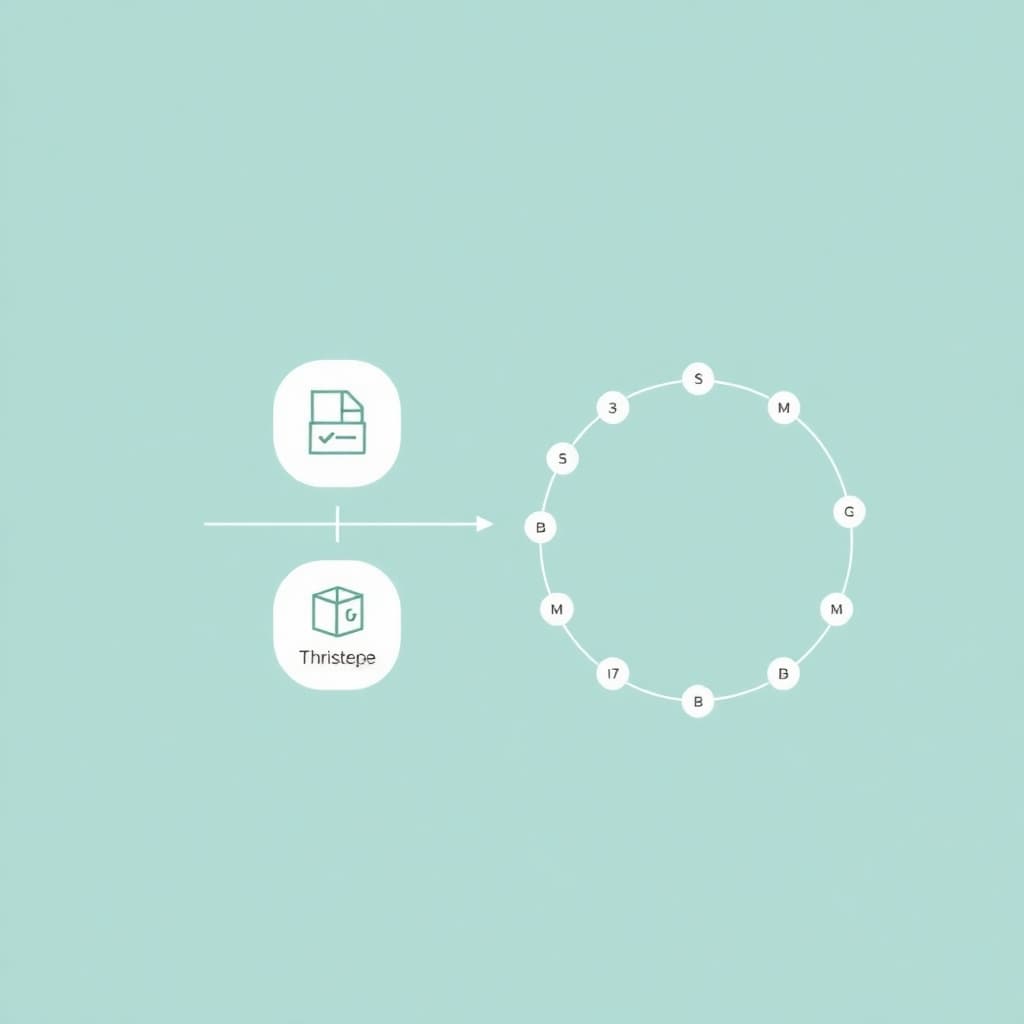
Data Visualization: The Trade Lifecycle Evolution
LSEG’s Strategic Bet: Why the World’s Oldest Bourse is Going Digital
LSEG’s strategy differs from the "crypto-native" exchanges (like Coinbase or Kraken) because it integrates deep regulatory compliance with the technology stack. They are utilizing the UK’s Digital Securities Sandbox (DSS), a legislative framework allowing financial market infrastructures to temporarily disapply certain regulations to test DLT (Distributed Ledger Technology).
Moving Beyond the "Digital Sandbox"
Most incumbent exchanges have treated blockchain as an R&D curiosity. LSEG is positioning this as a distinct business unit, likely to protect its legacy liquidity while building the rails for the next 50 years. The goal is not to replace the London Stock Exchange immediately but to create a parallel, interoperable venue that can handle complex private market assets first, before swallowing public equities.
By owning the entire vertical—from data (Refinitiv) to clearing (LCH) to trading—LSEG is uniquely positioned to enforce a standard. If they succeed, they force the hand of global custodians (State Street, BNY Mellon) to integrate with their node infrastructure or risk losing visibility on prime assets.
The Strategic Necessity of Collateral Mobility
The hidden driver here is collateral efficiency. In periods of high volatility, liquidity crunches occur because high-quality liquid assets (HQLA) are stuck in the wrong settlement pipe. LSEG’s digital platform aims to allow assets to move across borders and asset classes instantly. Imagine using tokenized UK Gilts to satisfy a margin call on a US dollar swap within seconds, 24/7. That creates a liquidity premium for assets listed on the digital exchange.
Unlocking Trapped Capital: The Economics of T+0
The move to T+0 is an economic imperative, not just a technical upgrade. The capital charges associated with unsettled trades act as a drag on market maker profitability.
Killing the Margin Call
Currently, trading firms must post initial margin and variation margin based on risk models that account for the 1-2 day settlement lag. If that lag disappears, the Value at Risk (VaR) calculation changes drastically.
Real-time risk management replaces overnight batch processing. Market makers can redeploy capital multiple times in a single day, theoretically increasing the velocity of money and deepening market liquidity. However, this creates a new pressure: the need for pre-funded accounts or real-time credit lines, as the "grace period" of T+2 settlement floats is removed.
Map of Incentives: Who Wins and Who Loses?
-
WINNERS:
- Market Makers & HFTs: Drastically reduced capital requirements and faster turnover.
- Issuers: Direct access to investors and programmable corporate actions (e.g., automatic dividend payouts via smart contracts).
- Regulators: Perfect, real-time audit trails without needing to request data dumps.
-
LOSERS:
- Legacy Custodians: Their business model relies heavily on float interest and reconciliation fees. Atomic settlement destroys the float.
- Clearing Houses (Long-term): As counterparty risk drops, the fees justified by the CCP guarantee will come under immense pressure.
- Settlement Intermediaries: Third-party reconcilers and middle-office service providers become redundant code.
The Interoperability Trap: Bridging Legacy Swifts with New Chains
The most formidable barrier to this vision is the "Cash Leg." You can tokenize a security easily, but settling it requires a digital form of cash that is as legally robust as central bank money.
Solving the Cash Leg
LSEG cannot settle trades in volatile cryptocurrencies or unregulated stablecoins. The solution lies in wholesale CBDCs (Central Bank Digital Currencies) or deposit tokens (commercial bank money on-chain). Projects like Fnality (formerly the Utility Settlement Coin), which is backed by a consortium of banks including Lloyds and UBS, are critical here.
If the securities leg is on LSEG’s private chain, but the cash leg is stuck in a RTGS (Real-Time Gross Settlement) system at the Bank of England, you lose atomicity. The systems must interoperate perfectly. This is where "Atomic Settlement" often breaks down in practice—waiting for the legacy banking system to catch up.
Regulatory Friction: Legal vs. Technical Finality
Technically, a blockchain transaction is final when it is included in a block (or after a certain number of confirmations). Legally, settlement finality is defined by statutes (like the SFD in Europe). There is a dangerous gap where a trade could be technically irreversible on-chain but legally contestable in court. The UK’s DSS is specifically designed to align these two definitions, ensuring that the code’s "true state" is recognized as the "legal state."
The 2030 Exchange Landscape: Hybrid Models and the Liquidity Split
By 2030, we will not see a complete switch-over. Instead, we will witness a bifurcation of liquidity.
The Inevitable Fragmentation
Highly liquid, standardized assets (Apple stock, US Treasuries) may remain on efficient, centralized legacy rails for some time because the speed advantages of centralization (microseconds) outweigh the settlement advantages of blockchain for HFTs.
However, complex, illiquid, or cross-border assets will migrate to the digital exchange. This creates a hybrid landscape where brokers must route orders between "Legacy Books" and "Digital Books."
Survival of the Fittest
Regional exchanges that cannot afford the massive CAPEX required to replatform will face an existential crisis. They will likely be forced to license technology stacks from giants like LSEG or Nasdaq (who is also heavily investing in this via their Market Technology division). The exchange business will consolidate from a venue operation business into a technology infrastructure duopoly.
Conclusion
The LSEG initiative proves that blockchain has graduated from a speculative asset class to essential infrastructure. The efficiency gains from eliminating reconciliation and unlocking trapped collateral are too large for the market to ignore. While the transition will be gradual to protect liquidity, the era of T+2 settlement cycles and bloated back-office reconciliation is mathematically obsolete. The battleground now shifts to the cash leg—integration with wholesale CBDCs and deposit tokens will be the final hurdle that determines when, not if, the plumbing gets replaced.
FAQ
How does infrastructure on-chaining differ from simple asset tokenization? Asset tokenization creates a digital representation of an asset (like a stock) on a blockchain, but often still relies on legacy rails for settlement and record-keeping. Infrastructure on-chaining moves the actual exchange, clearing, and settlement logic onto the ledger. This allows for atomic swaps and automated lifecycle events (like dividends or voting) without reliance on legacy intermediaries or manual reconciliation.
Will LSEG's move eliminate the need for brokers and custodians? Not immediately. While the technology allows for peer-to-peer trading, regulatory frameworks still require intermediaries for KYC/AML and investor protection. However, the role of custodians will shift dramatically. Instead of record-keeping reconciliation and managing settlement delays, they will focus on managing private keys, securing smart contract interactions, and verifying asset provenance.
Sources
Related
View all →
Crypto
Circle's Native Gas Abstraction: How Eliminating Network Fees Rewires Crypto Architecture
March 27, 2026
...

Crypto
When TradFi Meets Stablecoins: Inside the Circle and Mastercard Infrastructure Play
March 13, 2026
...