
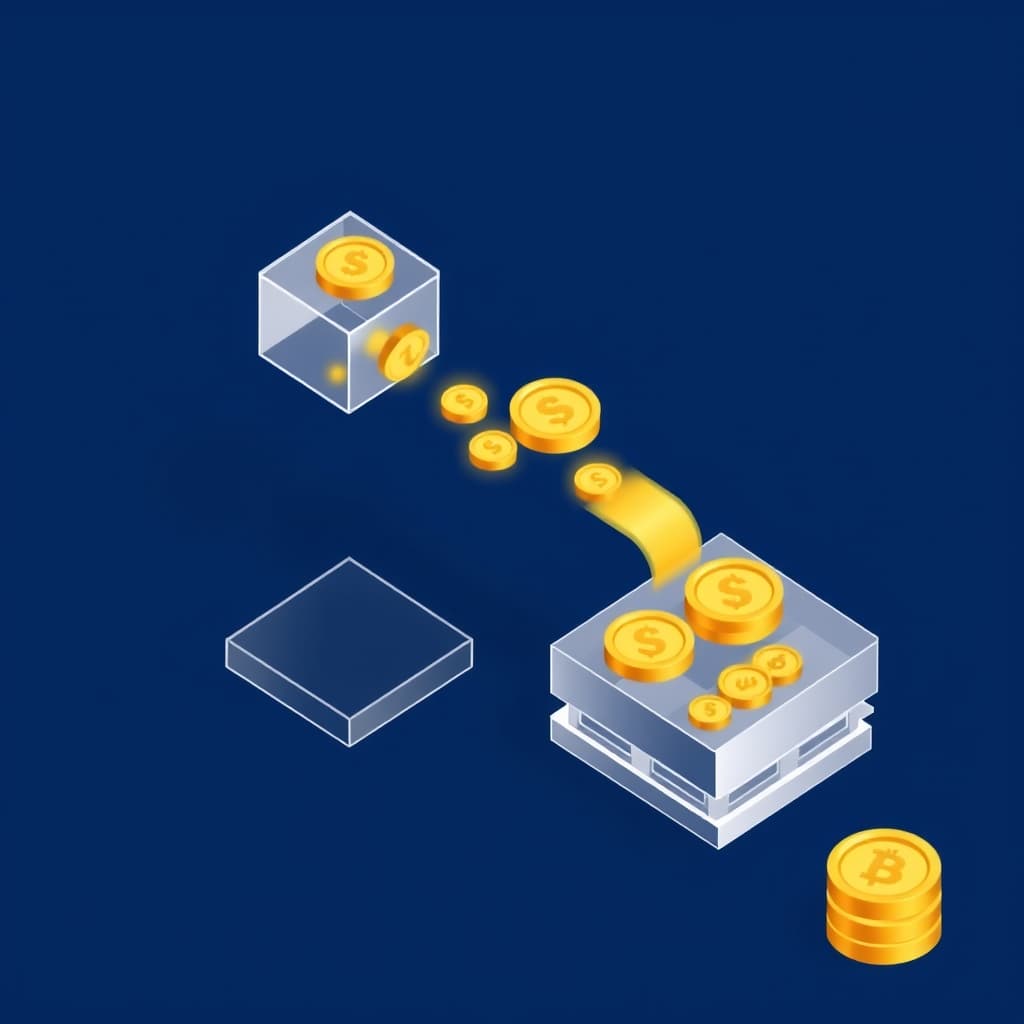

Circle's Native Gas Abstraction: How Eliminating Network Fees Rewires Crypto Architecture
The most significant obstacle to institutional blockchain adoption is not regulatory uncertainty or scalability limits, but the archaic requirement to hold volatile native tokens merely to pay for block space. As a venture capital specialist evaluating infrastructure plays for over 15 years, I analyze Circle’s recent pivot toward native gas abstraction—specifically through their Paymaster infrastructure and Programmable Wallets—using the framework of enterprise unit economics. This architectural shift from user-funded to protocol-abstracted gas transforms block space from a consumer retail product into a backend B2B wholesale utility.
The Mechanics Behind Circle's Fee Abstraction Protocol
Bypassing the Native Token Requirement
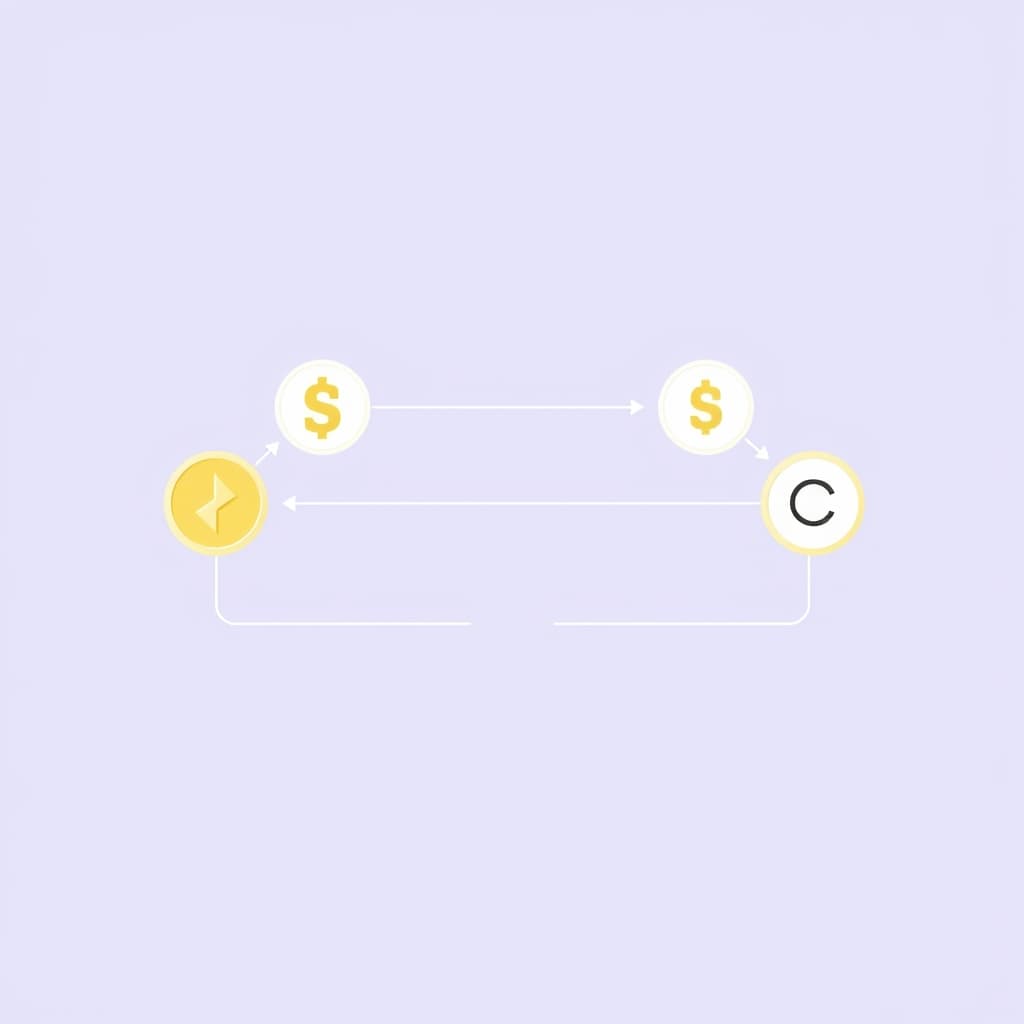
Historically, interacting with an EVM-compatible chain required an Externally Owned Account (EOA) funded with a base layer asset like Ethereum or Polygon. Circle's Gas Station and Paymaster contracts fundamentally alter this by decoupling the transaction sender from the fee payer,. Utilizing the ERC-4337 account abstraction standard, and recently expanded via EIP-7702 to support legacy EOAs, the protocol allows users to authorize a stablecoin transfer via an off-chain signature,. The smart contract infrastructure then processes this signature, extracting the gas cost directly from the user's USDC balance or entirely subsidizing it via a corporate sponsor.
Under the Hood of Sponsored Transactions
The technical execution relies on a specialized transaction supply chain. When an application initiates a transfer, it generates a
UserOperation. Instead of broadcasting directly to the mempool, this operation is routed to a bundler. The bundler aggregates multiple operations and submits them to the blockchain, interfacing with Circle’s Paymaster contract. The Paymaster verifies the operation and covers the native gas fee. In environments utilizing Circle Payments Network (CPN) Transactions V2, this is achieved via Permit2, which uses time-bound, single-use signatures to execute the transfer and fee extraction in a single atomic contract execution.Solving the UX Fragmentation Crisis for Enterprise Operators
Consolidating Treasury Management
For enterprise operators, managing multi-chain gas treasuries has historically been an accounting nightmare. Finance departments had to acquire, custody, and account for volatile assets across multiple networks just to facilitate basic customer withdrawals. Gas abstraction eliminates this operational overhead. By routing transaction costs through a Paymaster, enterprises can fund their gas sponsorship budgets entirely in fiat or stablecoins. This shift translates unpredictable on-chain network fees into a standard Customer Acquisition Cost (CAC) or operational expense, drastically simplifying corporate treasury workflows.
Lowering the Barrier for Mainstream FinTechs
The practical application of this architecture is already visible in consumer applications. Grab, the Southeast Asian super-app, deployed a pilot program leveraging Circle's Programmable Wallets and Gas Station to distribute NFT vouchers and rewards. By abstracting the underlying blockchain network fees, Grab delivered a Web3 experience that mirrored the frictionless interface of a traditional application,. Users in Singapore claimed and utilized digital assets without ever interacting with a crypto exchange, managing private keys, or calculating gas limits.
Ecosystem Impact on Layer 1 and Layer 2 Economics
Shifting Value Accrual Away from Base Layer Tokens
When end-users are no longer required to hold native tokens, the velocity and retail demand for base layer assets shift dramatically. The native token transitions from a ubiquitous medium of exchange into a specialized backend settlement asset used exclusively by infrastructure providers, validators, and bundlers. This structural change isolates the end-user from token volatility but also concentrates the holding of native gas tokens among a smaller set of institutional relayers, altering the traditional tokenomic models of Layer 1 networks.
The Rise of Paymasters and Relay Networks
As the burden of gas payment moves up the stack, a new economic sub-sector emerges: the bundler and Paymaster network. These entities compete on execution speed, reliability, and the efficiency of their native token inventory management.
Falsifiable claim: By Q4 2027, over 60% of all stablecoin transfer volume on EVM rollups will be routed through third-party paymasters rather than user-funded EOAs.
Indicators that would confirm or refute this trajectory include:
- A sustained decline in median native token balances across active retail wallets.
- Exponential revenue growth for ERC-4337 bundler services and Paymaster node operators.
- The frequency of EIP-7702 authorization payloads dominating block explorer transaction logs.
Regulatory and Compliance Implications of Sponsored Transfers
AML Tracing in a Gasless Environment
Decoupling the transaction sender from the gas payer introduces novel compliance variables. In a traditional model, blockchain analytics tools trace the origin of the native gas token to establish a risk profile for the wallet. When a centralized Paymaster sponsors the fee, the on-chain link between the user and their gas funding source is severed. To mitigate this, Circle’s infrastructure requires enterprise sponsors to implement robust Know Your Business (KYB) and Know Your Customer (KYC) frameworks at the application layer, ensuring that while the on-chain gas is anonymized by the bundler, the off-chain identity verification remains intact.
Institutional Policy Adjustments
Financial institutions operating under strict regulatory scrutiny often face internal policy prohibitions against holding unregistered digital assets. By utilizing the Circle Payments Network (CPN), Originating Financial Institutions (OFIs) can facilitate cross-border stablecoin settlements without ever touching the underlying blockchain's native token,. This abstraction layer satisfies conservative compliance departments, as the institution only interacts with a fully reserved, dollar-backed asset, thereby isolating their balance sheet from the regulatory ambiguity of utility tokens.
Forecasting the 2026-2030 Transaction Landscape
Universal Abstraction as an Industry Standard
As we progress through 2026, the competitive baseline for any decentralized application or wallet provider is the complete invisibility of the underlying blockchain. Competing stablecoin issuers and infrastructure providers will be forced to adopt similar paymaster architectures to maintain market share. The fragmentation of Layer 2 rollups—each with its own gas token—will be entirely abstracted away from the user interface, resulting a unified digital dollar ecosystem where cross-chain interoperability is handled asynchronously by backend relayers.
Preparing the Next Generation of Smart Contract Architecture
The convergence of gas abstraction with artificial intelligence points toward fully autonomous financial workflows. A recent experimental deployment by ZenML showcased an AI-powered escrow agent that parses legal contracts, extracts payment parameters, and programmatically deploys escrow smart contracts using Circle's developer tooling. Because the system utilizes gas abstraction, the AI agent can fund the contract deployment and transaction fees directly from the escrowed USDC balance. This eliminates the need for human intervention to provision native gas tokens, paving the way for autonomous machine-to-machine commerce.
Removing the native gas barrier is not merely a user interface upgrade; it is a structural necessity for global liquidity. Monitoring how competing stablecoin issuers respond to this standard will dictate the pace of enterprise blockchain deployment. The transition from user-funded block space to wholesale institutional gas sponsorship fundamentally rewires the economics of decentralized networks, setting a new baseline for frictionless digital finance.
FAQ
How does native gas abstraction differ from traditional account abstraction? While account abstraction enables smart contract wallets to execute complex logic, native gas abstraction specifically focuses on the protocol-level elimination of requiring a base layer token to pay for transaction inclusion, often leveraging off-chain paymasters.
Who ultimately bears the cost of the network fees in Circle's model? The fees are typically absorbed by the decentralized application developer, enterprise sponsor, or wallet provider via a paymaster contract, treating the transaction cost as a customer acquisition or operational expense rather than pushing it to the end user.
Sources
Related
View all →
Crypto
When TradFi Meets Stablecoins: Inside the Circle and Mastercard Infrastructure Play
March 13, 2026
...


Crypto
The Great Replatforming: Why LSEG’s Blockchain Pivot Signals the End of T+2 Settlement
February 20, 2026
...