
Tech
Petro-Chokepoint Equity Contagion: Why the Hormuz Blockade Threatens Broad Indices
March 16, 2026
...

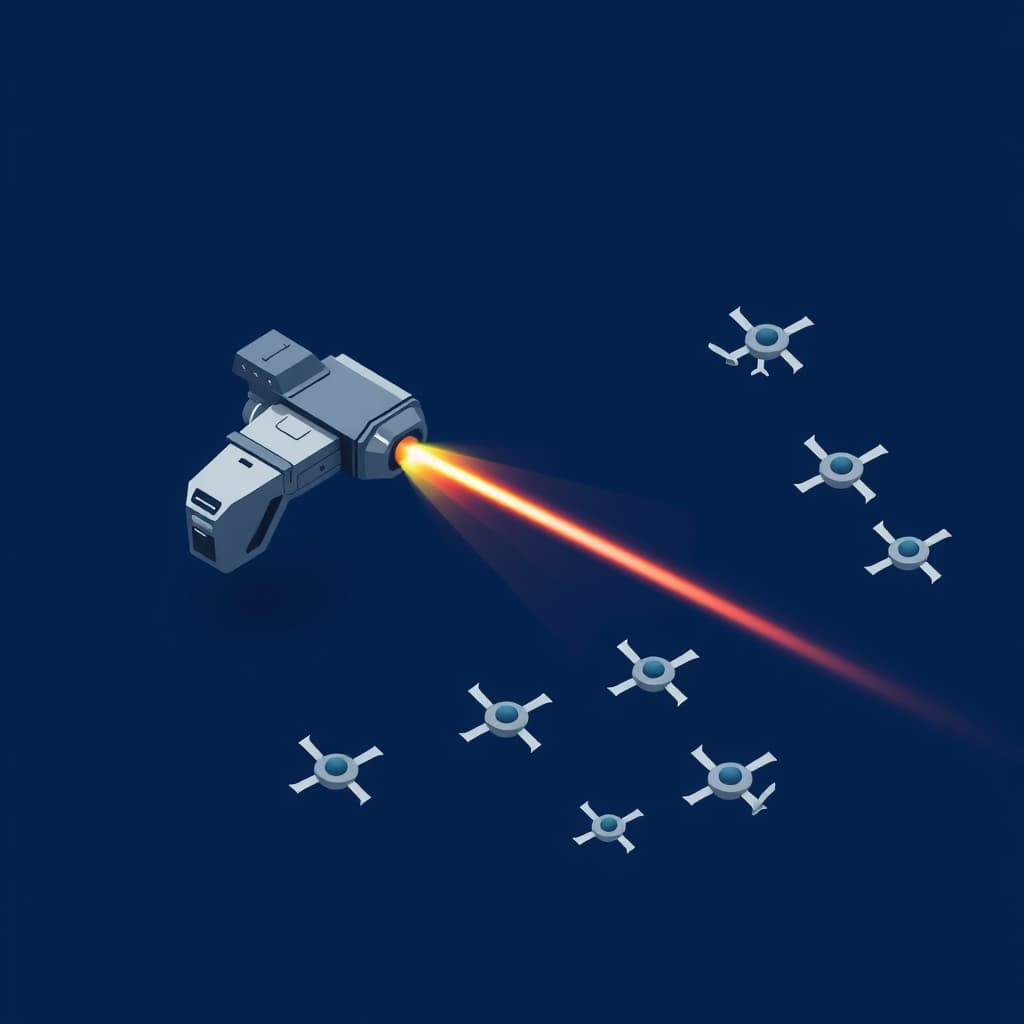
Traditional air defense is mathematically obsolete. As a venture capital specialist allocating capital across the defense technology sector for over 15 years, I evaluate emerging systems through a strict cost-exchange ratio framework. When a $20,000 loitering munition forces the expenditure of a $4 million kinetic interceptor, the defending ledger bleeds out long before the physical infrastructure sustains damage. This structural asymmetry has pushed modern defense networks to a financial breaking point. The only viable path forward is directed-energy cost arbitrage—replacing chemical propulsion and physical kill vehicles with photon-based platforms that reduce marginal engagement costs to the price of electricity. The U.S. Government Accountability Office (GAO) and industry trackers like National Defense Magazine highlight a clear mandate: defense procurement must abandon unsustainable kinetic ratios. Tracking this shift requires examining the engineering constraints, the venture capital influx, and the shifting procurement models that will define military budgets through 2026 and beyond.
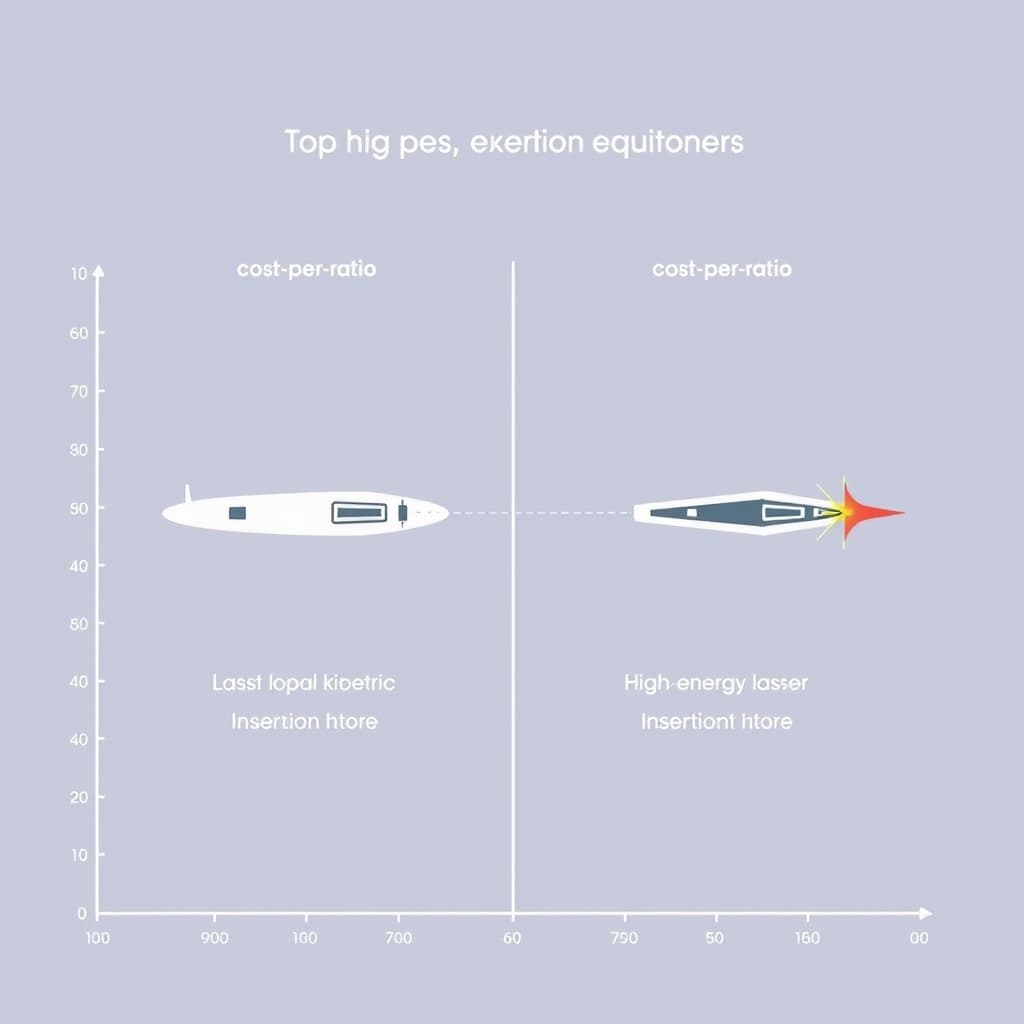
Modern warfare has become an attritional battle fought on spreadsheets. Adversaries have weaponized the cost-exchange ratio by mass-producing rudimentary, low-flying drones. A standard Shahed-136 drone costs a fraction of the interceptors designed to destroy it. Launching a swarm of fifty such drones requires roughly $1 million in capital. Defending against that exact swarm using Patriot PAC-3 missiles demands $200 million. This 200-to-1 financial disparity means state actors can exhaust a defender's budget without ever achieving a kinetic strike. The strategic goal is no longer immediate destruction; it is the deliberate bankruptcy of the adversary's defense budget.
Commercial and strategic assets—ranging from desalination plants to semiconductor fabrication facilities—require continuous, unbroken defensive umbrellas. When defense forces deploy $12 million THAAD interceptors or $4 million Patriot missiles to swat down cheap drones, they deplete finite stockpiles intended for sophisticated ballistic missile threats. The Middle East serves as the clearest example of this vulnerability. Energy grids and shipping lanes face daily barrages, forcing commanders into impossible decisions: expend irreplaceable high-tier interceptors on low-tier threats, or allow critical infrastructure to burn.
Directed-energy platforms flip the economic equation by relying entirely on electrical power generation. High-energy lasers (HEL) and high-power microwave (HPM) systems strip away the need for complex chemical propellants, guidance computers, and precision-machined titanium components. A 100-kilowatt laser requires only the diesel or battery power necessary to generate the beam. This reduces the marginal cost per engagement from millions of dollars to roughly $3.50 to $10.00. The magazine is effectively infinite, constrained only by the fuel available to the generator and the thermal limits of the cooling system.
The implications extend far beyond the battlefield into global logistics. Traditional interceptors require sprawling, fragile supply chains involving rare earth metals, explosive compounds, and specialized manufacturing facilities that take years to scale. Directed-energy weapons bypass this bottleneck. By shifting the logistical burden from transporting explosive ordnance to simply generating localized electricity, military branches drastically reduce their reliance on vulnerable maritime shipping routes. Forward operating bases no longer need to stockpile highly volatile interceptor magazines, entirely altering theater logistics.
Mini Case Study: Rafael's Iron Beam Integration The urgency to close the cost-exchange gap has accelerated procurement timelines. In late 2024, the Israeli Ministry of Defense finalized a $500 million contract with Rafael Advanced Defense Systems and Elbit Systems to scale the serial production of the Iron Beam. By 2026, this 100kW laser system operates alongside the kinetic Iron Dome. The Iron Beam handles the high-volume, low-cost drone threats at a few dollars per shot, reserving the $50,000 Iron Dome interceptors for complex, high-velocity rockets. This layered architecture proves that directed energy is not a future concept; it is an actively deployed financial shield.
Institutional capital is aggressively flowing into the sub-components of directed-energy systems. Venture funds are not necessarily backing the prime contractors; they are targeting the agile startups solving specific bottlenecks. Companies developing advanced photodetectors, coherent beam combining (CBC) algorithms, and solid-state thermal management modules are commanding premium valuations. The investment thesis is straightforward: any technology that increases the “wall-plug efficiency” (the ratio of electrical power in to optical power out) directly increases the lethal range of the weapon, making these startups prime acquisition targets.
Firing a high-energy laser through the atmosphere is fundamentally different from firing a missile. Photons interact with dust, moisture, and temperature variations, causing the beam to scatter and lose focus. Additionally, the laser heats the air it passes through, creating a thermal lens that defocuses the beam—a phenomenon known as thermal blooming. Engineering teams are deploying AI-driven adaptive optics, utilizing deformable mirrors that adjust thousands of times per second to compensate for atmospheric distortion. Mastering this software-hardware integration remains the primary technical hurdle for engaging targets beyond visual range.
Generating a lethal beam requires massive electrical input. A 300kW laser might require over a megawatt of raw power due to current efficiency limits. Packaging that power generation and the associated liquid cooling systems onto a mobile chassis—like a Stryker armored vehicle or a tactical truck—is an extreme packaging constraint. The transition from stationary base defense to mobile maneuver defense hinges entirely on the miniaturization of high-density power storage and rapid thermal dissipation technologies.
Defense primes are executing a delicate balancing act. Companies like Lockheed Martin and Raytheon must protect their highly profitable legacy missile portfolios while positioning themselves to dominate the directed-energy transition. Lockheed's rollout of the 300kW Valkyrie (IFPC-HEL) system for the U.S. Army signals this pivot. To compensate for the loss of recurring revenue from expendable missile sales, primes are transitioning toward Hardware-as-a-Service (HaaS) models. Future revenue will stem from continuous software upgrades, AI targeting model subscriptions, and recurring thermal module replacements.
The ecosystem is rapidly stratifying. The table below maps the current incentive structures and projected outcomes for the key players navigating this transition.
The transition from kinetic interceptors to photons represents a permanent reset in defense economics. The $20,000 loitering munition exposed a fatal flaw in modern air defense, but the market has responded with a mathematically superior solution. Tracking deployment timelines, specific component breakthroughs, and shifting procurement contracts will reveal the primary beneficiaries of this shift. As directed-energy systems reach scale, the financial advantage will definitively return to the defender.
What specifically makes directed-energy platforms so cost-effective compared to traditional missiles? They rely entirely on electrical power generation rather than complex chemical propellants, guidance computers, and precision-machined physical kill vehicles. This reduces the marginal cost per engagement to simply the price of the electricity consumed during the burst.
How will defense contractors monetize laser systems if the recurring cost-per-shot is eliminated? Firms are pivoting toward advanced hardware-as-a-service models. Revenue generation will stem from ongoing system maintenance, thermal management module replacements, and continuous software-driven targeting enhancements.