
Tech
Weaponizing the Strait: How Maritime Extortion is Rewriting Global Energy Economics
March 10, 2026
...


Enterprise leaders and technology professionals face an immediate, compounding risk: misjudging the timeline and severity of Cognitive Labor Displacement. If you are budgeting for a traditional software engineering headcount or anchoring a career on routine data management, you are optimizing for an economy that effectively ended in early 2026. After 15 years of analyzing technology policy and labor regulations, I view the current workforce restructuring across major tech firms not as a cyclical downturn, but as a definitive market pivot. We will examine the exact mechanics of how generative AI is transitioning from a supplementary digital copilot to a direct replacement for human cognitive labor, fundamentally rewriting enterprise software economics.
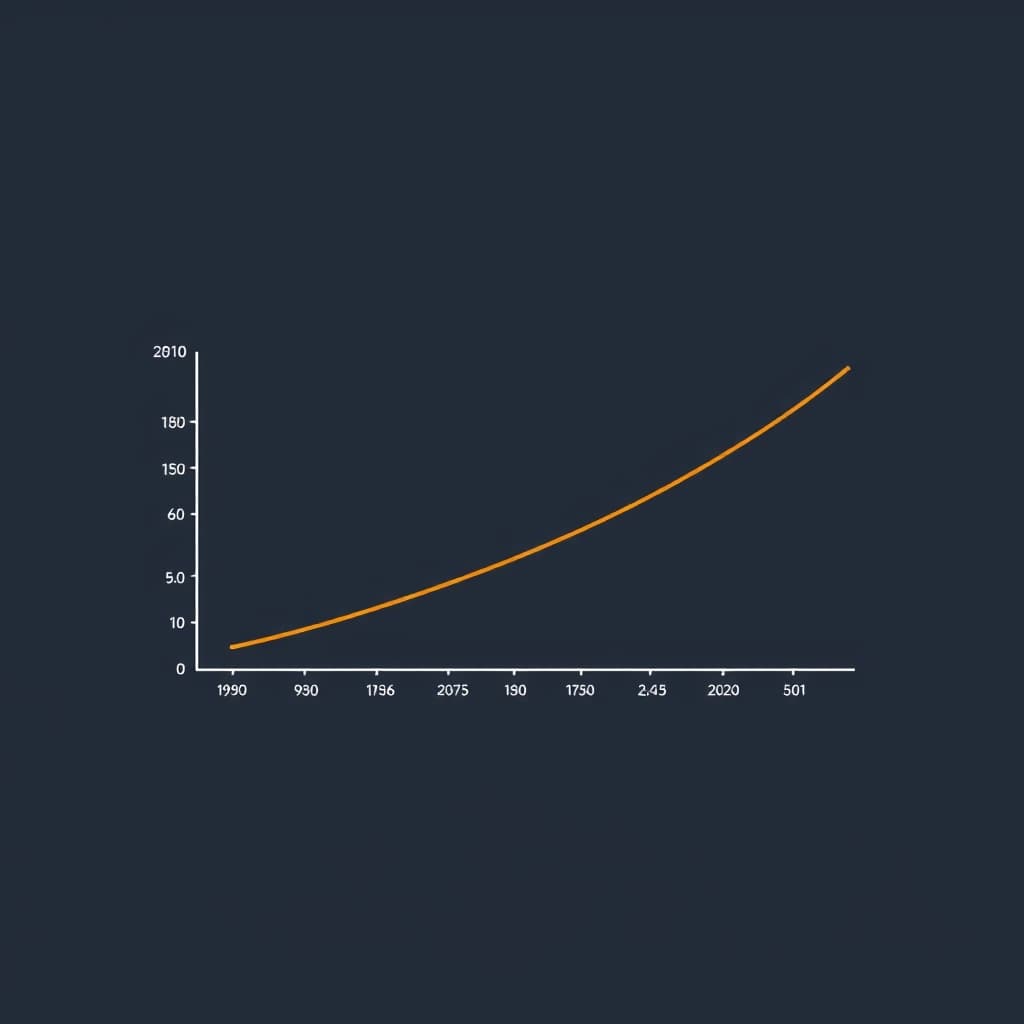
For the past three years, the dominant narrative positioned artificial intelligence as an assistive technology. Developers used code-completion plugins, and project managers relied on automated meeting summaries. That era is over. We have crossed the threshold into autonomous agency. Enterprise software is no longer designed to make humans faster at their jobs; it is architected to execute multi-step workflows without human intervention. This shift targets the core of the knowledge economy.
Early language models required constant human prompting, evaluation, and correction. Today's agentic systems operate on goal-oriented frameworks. When a system can independently write a script, test it, debug the errors, and deploy the final code to production, the human is no longer a pilot—they are a bottleneck. The supplementary tool paradigm relied on the assumption that human judgment was required at every micro-step. Advanced AI breaks this by demonstrating reliable zero-shot reasoning and contextual memory, rendering the traditional human-in-the-loop requirement obsolete for routine tasks.
The starkest evidence of this shift materialized in March 2026. Atlassian, a pioneer in collaboration software, filed an 8-K with the SEC announcing the elimination of 1,600 roles—approximately 10% of its global workforce. CEO Mike Cannon-Brookes explicitly cited the transition to an "AI-first" company. This was not a standard cost-cutting measure driven by macroeconomic headwinds. It was a structural reorganization. The cuts heavily impacted software research and development teams, the very knowledge workers who built the company's core products. Simultaneously, CTO Rajeev Rajan stepped down, replaced by leaders specifically designated as next-generation AI talent.
Atlassian is absorbing between $225 million and $236 million in restructuring charges to execute this pivot. The strategy is clear: liquidate human capital to self-fund compute capital. Tech companies are redirecting payroll budgets into AI infrastructure, data center capacity, and enterprise sales motions tailored for autonomous tools. When a company is willing to take a quarter-billion-dollar hit to swap human engineers for algorithmic capacity, the market is signaling that the return on investment for silicon now vastly outpaces the historical returns on carbon-based labor.
The financial calculus driving Cognitive Labor Displacement is brutal but highly rational for corporate boards. A mid-level software engineer or data analyst in a Tier 1 city costs a company upward of $200,000 annually when factoring in benefits, equity, and overhead. An enterprise-grade autonomous AI agent, operating continuously without fatigue, costs a fraction of that in API calls and compute overhead.
Routine cognitive tasks are being commoditized. Writing boilerplate code, generating standard financial reports, and tracking project milestones are no longer high-value skills. As AI agents natively integrate into platforms like Jira and GitHub, the need for middle-management layers to translate business requirements into technical tickets vanishes. The system translates, executes, and reports on its own.
Replacing thousands of human workers with algorithms triggers intense regulatory scrutiny. In jurisdictions like the European Union, the AI Act and stringent labor protections require companies to prove that algorithmic deployments do not violate worker rights or introduce systemic bias. Companies executing mass layoffs must navigate the WARN Act in the US and complex consultation periods in regions like Australia—where Atlassian is headquartered. Regulators are increasingly scrutinizing "AI-washing," where companies use artificial intelligence as a convenient scapegoat for poor financial management, though the current wave of restructuring appears deeply tied to actual technological shifts.
Corporate boards are walking a tightrope. They must satisfy institutional investors demanding the margin expansions promised by AI, while managing the severe reputational damage associated with mass Cognitive Labor Displacement. The dominant strategy is framing these cuts as "rebalancing" or "skills realignment." By offering extended severance packages and loudly promoting the hiring of specialized AI researchers, boards attempt to mask the net-negative impact on total employment numbers.
The tech workforce of 2030 will look fundamentally different. The demand for sheer volume of coders will collapse. The market will premium-price the "AI-Orchestrator"—a hybrid systems architect and domain expert who designs the parameters, security guardrails, and strategic goals for fleets of autonomous agents. These professionals will not write code; they will govern the machines that write the code.
Not all knowledge work is equally vulnerable. Tasks requiring