

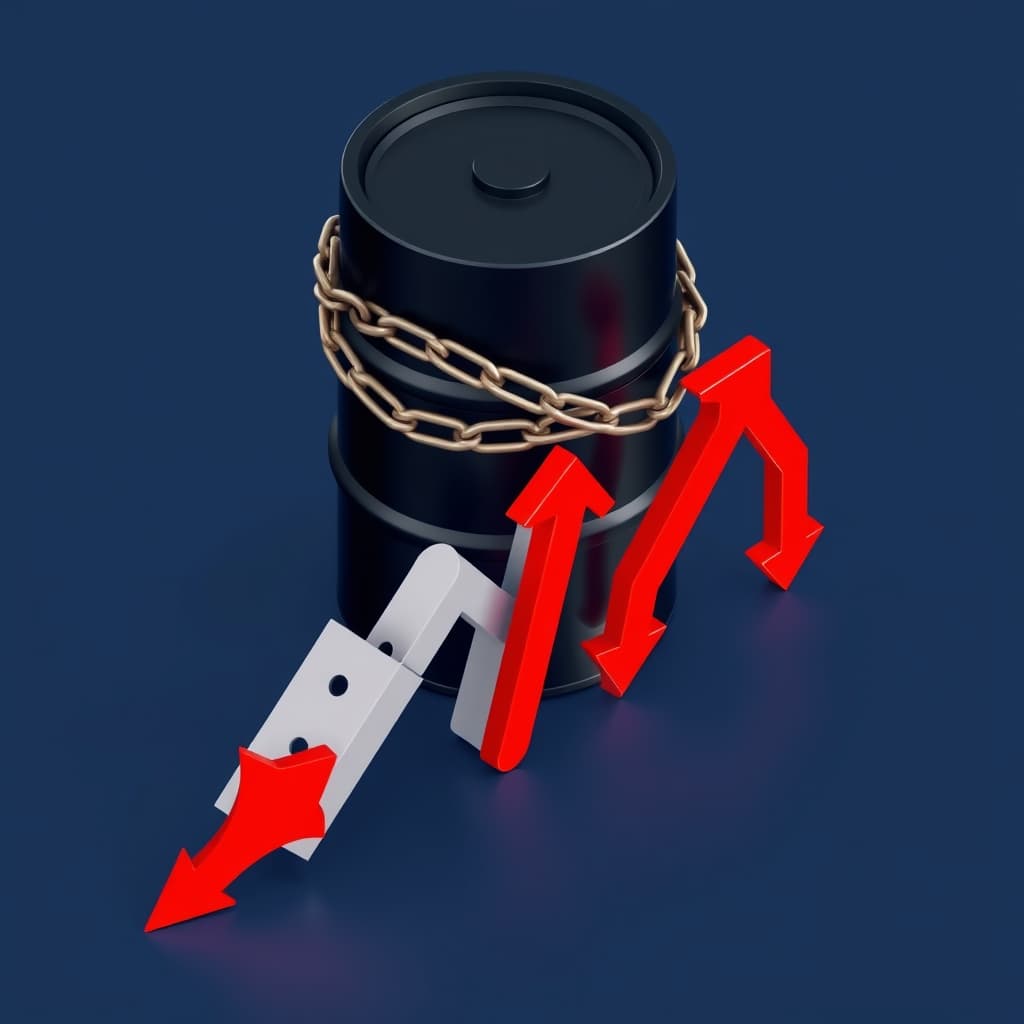
Petro-Chokepoint Equity Contagion: Why the Hormuz Blockade Threatens Broad Indices
When marine insurers suspended war-risk coverage for tankers transiting the Persian Gulf this Monday, spot freight rates for Very Large Crude Carriers (VLCCs) tripled in less than four hours. This micro-liquidity shock at the maritime level is the opening tremor of a much larger macroeconomic earthquake. Global markets are facing an unprecedented liquidity and valuation crisis following the destruction of the Kharg Island export hub. Investors will discover the exact transmission mechanisms converting the Strait of Hormuz blockade into widespread equity contagion across major indices. Leveraging a macroeconomic transmission framework, this analysis breaks down how a localized physical supply disruption mutates into systemic financial devaluation.
The Mechanics of Systemic Devaluation Triggered by Maritime Blockades
From Spot Prices to Corporate Margins
The physical realities of the Strait of Hormuz dictate the baseline for global energy pricing. In the first half of 2025, approximately 20.9 million barrels per day (b/d) transited this narrow corridor, representing roughly 20% of global petroleum liquids consumption. Kharg Island alone historically handled 90% of Iran’s crude exports, equating to roughly 1.5 million b/d. When infrastructure of this magnitude is taken offline, the immediate result is a structural deficit in spot markets.
Brent crude spikes translate directly into compressed operating margins across the real economy. Transportation, heavy manufacturing, and logistics sectors face immediate cost-of-goods-sold (COGS) inflation. Because physical supply chains operate on just-in-time inventory models, companies cannot absorb a 30% to 40% increase in bunker fuel or diesel costs without passing those expenses to consumers. This dynamic forces a rapid downward revision of forward earnings estimates for non-energy sectors.
The Algorithmic Sell-Off Pathway
Modern equity markets do not wait for quarterly earnings reports to reprice risk; they react instantly to bond market signals. As oil prices surge, inflation expectations—measured by breakeven inflation rates on Treasury Inflation-Protected Securities (TIPS)—gap higher.
Quantitative trading strategies, particularly risk-parity funds and Commodity Trading Advisors (CTAs), utilize these yield curve shifts as primary inputs. When the 10-year Treasury yield spikes in response to energy-driven inflation fears, algorithmic models mechanically de-risk. They sell high-duration assets, heavily concentrated in broad indices like the S&P 500, to maintain target volatility levels. This creates a self-reinforcing feedback loop: higher oil prices trigger higher yields, which trigger algorithmic selling, entirely independent of a company's fundamental performance.
Tech Sector Vulnerability in an Energy-Starved Market
Semiconductor Manufacturing and Power Costs
The assumption that technology equities are insulated from physical commodity shocks is a fundamental mispricing of risk. Semiconductor fabrication acts as a prime mini-case study for this vulnerability. The industry is highly energy-intensive, globally consuming an estimated 149 billion kWh annually. A single 12-inch wafer fab requires 100 to 200 megawatts (MW) of continuous baseload power to maintain cleanroom climate control, extreme ultraviolet (EUV) lithography tools, and chemical processing.
When global energy prices spike due to Middle Eastern supply constraints, the cost of grid electricity rises concurrently. Semiconductor manufacturers, already operating under tight capital expenditure constraints, face immediate margin compression. This energy intensity means that a physical blockade in the Persian Gulf acts as a direct tax on silicon production in Taiwan, South Korea, and the United States.
Cloud Infrastructure Squeezes
Hyperscale data centers face a parallel threat. Cloud service providers rely on long-term power purchase agreements (PPAs), but marginal power requirements and backup generator dependencies expose them to spot energy markets. As the cost to cool and power server farms escalates, cloud infrastructure providers must either absorb the costs—damaging their operating margins—or hike prices for enterprise clients. Higher enterprise software costs subsequently reduce corporate IT budgets across the broader economy, acting as a secondary drag on tech sector growth projections.
Evaluating the Domino Effect Across the S&P 500
Cross-Sector Value Destruction
The transmission of petro-chokepoint equity contagion is uneven. Different sectors exhibit varying degrees of elasticity in response to a sustained energy shock.
Flight to Safe-Haven Assets vs. Growth Equities
Capital allocation shifts aggressively during a maritime blockade. Growth equities, whose valuations rely heavily on discounted future cash flows, are highly sensitive to the discount rate. As the Federal Reserve is forced to maintain its target rate at 3.5-3.75%—or even hike—to combat energy-driven inflation, the present value of those future earnings collapses. Institutional capital rotates rapidly out of the NASDAQ 100 and into short-duration, cash-flow-positive assets. Defense contractors, domestic energy producers, and short-term sovereign debt become the primary beneficiaries of this capital flight, draining liquidity from broad market indices.
Strategies for Institutional Portfolios Amidst Hormuz Volatility
Hedging with Energy Derivatives
Passive index investing fails during a petro-chokepoint crisis. Institutional managers must actively hedge broad index exposure using targeted energy derivatives. Out-of-the-money (OTM) call options on Brent crude futures provide asymmetric upside if the blockade extends beyond a 30-day window. Crack spread futures—betting on the margin between crude oil and refined products—offer another layer of protection, as refining capacity often bottlenecks when raw crude routing is disrupted.
Identifying Resilient Balance Sheets
Portfolio resilience requires identifying companies capable of surviving a prolonged period of elevated input costs and restricted capital access.
Long-Term Rebalancing: Market Outlook for 2026 and Beyond
Accelerating the Shift to Renewable Infrastructure
The destruction of Kharg Island and the subsequent Hormuz bottleneck forces a permanent structural premium on domestic energy security. Governments and corporations will accelerate capital expenditure into grid-scale battery storage, nuclear baseload, and localized solar microgrids. This shift is no longer driven solely by environmental, social, and governance (ESG) mandates, but by hard national security and operational continuity requirements. Infrastructure funds focused on decentralized power generation will likely command a premium valuation multiple through the end of the decade.
Decoupling Equity Valuations from Middle East Oil
By late 2026, the market will begin rewarding corporations that demonstrate verifiable decoupling from fossil-fuel-heavy supply chains. Equity analysts will increasingly incorporate "energy security discounts" into their discounted cash flow (DCF) models for companies overly reliant on global maritime shipping. The systemic shock of the Hormuz blockade will ultimately force a permanent repricing of sovereign risk, permanently altering the composition of global supply chains. What would change my mind: If Saudi Arabia and the UAE successfully utilize the East-West Pipeline (Petroline) and the Abu Dhabi Crude Oil Pipeline (ADCOP) to reroute 5+ million b/d, bypassing the Strait of Hormuz entirely, the inflation shock would be effectively neutralized. This physical bypass would allow the Federal Reserve to resume its planned easing cycle, invalidating the bearish thesis for tech valuations.
Falsifiable Claim: The S&P 500 Information Technology sector will experience a minimum 15% valuation contraction within 90 days if Brent crude sustains above $105/bbl, driven by the Federal Reserve abandoning its planned 2026 rate cuts. Confirming Indicators:
- US Core PCE remaining above 2.5% for two consecutive months.
- The Federal Funds Rate holding at 3.5-3.75% through Q3 2026.
- The VIX sustaining a level above 25. The immediate threat of petro-chokepoint contagion requires aggressive portfolio rebalancing and stress-testing. Institutional investors must closely monitor volatility indexes and physical shipping rates to anticipate the next phase of market repricing.
FAQ
How does a regional energy blockade trigger a broad tech equity sell-off? Tech equities are highly sensitive to discount rate shifts. When oil supply drops sharply, inflation expectations spike, forcing central banks to maintain or raise interest rates, which disproportionately impacts the valuation models of growth stocks.
Which S&P 500 sectors offer the best hedge against Hormuz-driven contagion? Beyond direct energy producers, defense contractors and domestic utility infrastructure providers typically demonstrate resilience. Companies with hyper-localized supply chains and low energy intensity in their production processes also mitigate downside risk.
Sources
- U.S. Energy Information Administration (EIA) - World Oil Transit Chokepoints
- International Energy Agency (IEA) - Strait of Hormuz Analysis
- Congressional Budget Office (CBO) - The Budget and Economic Outlook: 2026 to 2036
- Federal Reserve Bank - Monetary Policy Implementation and Target Rates
- U.S. Energy Information Administration (EIA) - Strait of Hormuz Oil Transit Volume
Related
View all →

Tech
Weaponizing the Strait: How Maritime Extortion is Rewriting Global Energy Economics
March 10, 2026
...
Tech
The Weaponization of Water: How Desalination Plant Attacks Redefine Modern Warfare
March 09, 2026
...