The Weaponization of Water: How Desalination Plant Attacks Redefine Modern Warfare
When an unauthenticated Modbus TCP protocol transmits cleartext sensor readings across a Seawater Reverse Osmosis (SWRO) facility's network, it is not merely an IT oversight—it is a loaded weapon pointed at a region's lifeblood. The expanding Middle East conflict has escalated into direct attacks on vital water desalination plants in both Bahrain and Iran. By targeting these multi-billion-dollar hydrological chokepoints, adversaries are turning fundamental civilian survival resources into asymmetric strategic leverage. We are witnessing the dawn of hydrological warfare, where disrupting the tap is more devastating than bombing a military base.
The Map of Incentives:- The Attackers (State & Non-State Proxies): Win by inflicting maximum societal panic and economic hemorrhage with minimal kinetic expenditure. A cyber-physical strike on a water grid forces immediate geopolitical concessions.
- The Defenders (Gulf States & Utility Operators): Lose massively if they maintain flat Operational Technology (OT) networks. They are forced into a reactive posture, bleeding capital to secure legacy infrastructure.
- The Ecosystem (Marine & Coastal Economics): Loses generationally. Uncontrolled brine discharge and chemical contamination from damaged plants trigger localized marine extinction events, decimating fishing economies.
Targeting the Tap: The Mechanics of Compromising Desalination Facilities
Physical Strikes vs. Cyber Intrusions in Water Processing
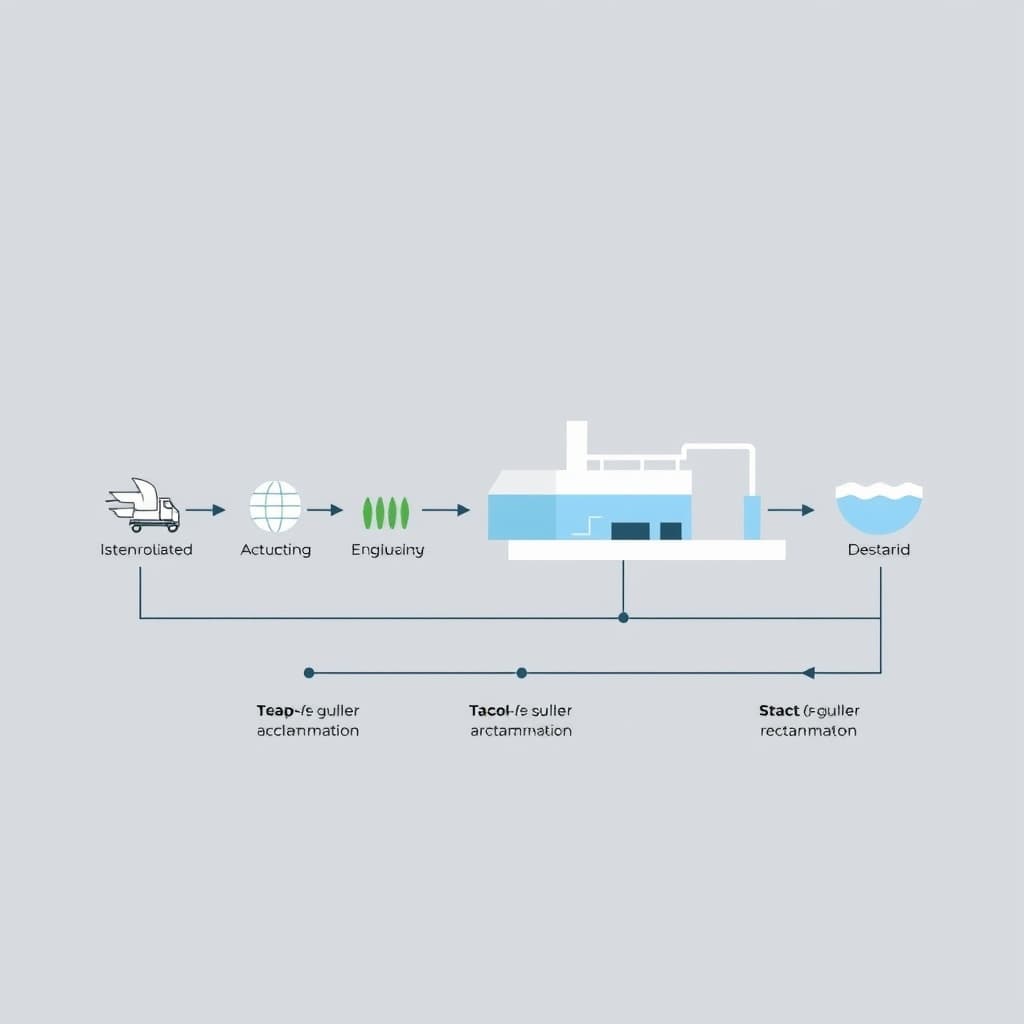
Modern desalination plants are sprawling, energy-intensive industrial complexes that present an impossibly wide attack surface. Adversaries currently deploy a dual-pronged approach to dismantle these facilities. Kinetic strikes utilize low-cost, radar-evading loitering munitions to target the physical intake valves and high-pressure pumping stations. These physical assets are difficult to armor and slow to replace. Conversely, cyber intrusions exploit the soft underbelly of industrial control systems (ICS). Hackers penetrate the supervisory control and data acquisition (SCADA) networks, manipulating chemical dosing controllers to alter chlorine or pH levels, rendering the output toxic without firing a single shot.
Critical Vulnerabilities in Reverse Osmosis Supply Chains
The core of modern desalination relies on Seawater Reverse Osmosis (SWRO). This process is highly sensitive to operational parameters; even a microscopic shift in pressure can rupture the delicate semi-permeable membranes. The supply chain for these specialized membranes is heavily bottlenecked, with lead times often stretching into months. When an attacker successfully breaches a facility's programmable logic controllers (PLCs) and induces a sudden pressure spike, they do not just halt production for a day. They physically destroy millions of dollars of imported filtration media, effectively bricking the plant until a complex, international supply chain can deliver replacements.
Humanitarian and Ecological Fallout from Water Grid Disruptions
Immediate Threats to Civilian Survival Operations
When a regional water grid collapses, the timeline from inconvenience to catastrophe is measured in hours. Hospitals lose the ability to perform basic sanitation, dialysis, and surgical procedures. Municipalities are forced to deploy emergency water tankers, creating highly visible, vulnerable distribution chokepoints that breed civil unrest. In desert climates where ambient temperatures regularly exceed 40°C, the sudden loss of potable water transforms dense urban centers into unlivable disaster zones, triggering immediate internal displacement and overwhelming neighboring jurisdictions.
Long-Term Brine Toxicity and Marine Ecosystem Collapse
The environmental cost of weaponizing water infrastructure extends far beyond the human toll. Global desalination plants already produce roughly 141.5 million cubic meters of brine daily—a highly concentrated, toxic byproduct laced with chlorine and anti-scalants. A compromised facility loses its ability to safely diffuse this waste. If discharge systems are damaged or deliberately misconfigured, raw, untreated brine dumps directly into coastal waters. This hyper-saline sludge sinks to the ocean floor, violently depleting oxygen levels and causing localized extinction events for marine life, which subsequently obliterates the regional fishing industry.
Strategic Shifts in the Gulf: Analyzing the Bahrain and Iran Strikes
The Bahrain Incident: Disruption Timelines and Regional Panic
The recent assault on Bahrain's desalination infrastructure exposed the sheer fragility of island-state hydrology. Attackers systematically degraded the facility's output capacity, causing a rapid drop in municipal reservoir pressure. The disruption timeline was brutally efficient: within twelve hours, secondary agricultural feeds were severed to preserve drinking water, and within twenty-four hours, the state was forced into emergency rationing. The psychological impact rippled across the Gulf Cooperation Council (GCC), proving that even heavily defended nations are entirely at the mercy of their water processing nodes.
Iran's Infrastructure Under Siege: Tactical Asymmetry at Play
Simultaneously, the strikes against Iran's southern coastal desalination plants highlighted a different facet of hydrological warfare: tactical asymmetry. Iran relies heavily on these facilities to sustain its arid southern provinces. By crippling these specific nodes, adversaries bypassed traditional military engagements entirely, choosing instead to stoke internal domestic pressure and economic instability. This method of warfare requires a fraction of the budget of a conventional bombing campaign but yields a devastating strategic dividend, forcing the state to divert military resources toward defending civilian utility outposts.
Securing the Well: Defense Strategies for Hydrological Assets
Implementing Zero-Trust Architecture in Water Utility SCADA Systems
The era of the "air-gapped" industrial network is a dangerous myth. Modern water utilities require continuous telemetry and remote monitoring, bridging the gap between IT and OT. To survive the threat landscape of 2026 and beyond, operators must abandon flat networks and implement Zero-Trust Architecture down to the PLC level.
Consider the 2026 Shieldworkz case study, where a regional public water authority serving 8 million residents transformed its cybersecurity posture. By enforcing micro-segmentation and strict identity verification for every machine-to-machine interaction, the utility isolated its chemical dosing controllers from the broader network. If an attacker breaches a remote sensor, Zero-Trust protocols prevent lateral movement, ensuring that a compromised telemetry node cannot be weaponized to alter water toxicity.
Enforcing International Humanitarian Law in the Drone Era
Defending the grid requires legal and diplomatic modernization alongside technical upgrades. Under the Geneva Conventions, destroying objects indispensable to the survival of the civilian population is strictly prohibited. Yet, the proliferation of cheap, autonomous drones and proxy-driven cyber attacks blurs the lines of attribution. The international community must codify specific protocols—building upon the Geneva List of Principles on the Protection of Water Infrastructure—that classify cyber-physical strikes on desalination plants as crimes of universal jurisdiction. Without enforceable consequences and swift economic sanctions against state sponsors of hydrological terrorism, the tactical appeal of these strikes will only grow. If regional coalitions rapidly deploy decentralized, off-grid water generation systems powered by localized renewables—rendering massive, centralized SWRO plants obsolete—my assessment of this strategic vulnerability would shift. Until then, the extreme concentration of water production in a few hyper-visible nodes guarantees they remain primary targets.
The transition toward targeting water systems marks a grim evolution in asymmetric conflict, demanding immediate defensive modernization. Global governments and tech leaders must urgently collaborate to harden hydrological infrastructure before regional scarcity triggers broader catastrophic failures.
FAQ
Why are desalination plants particularly vulnerable to modern asymmetric attacks? These facilities rely on highly centralized SCADA systems for continuous monitoring and possess massive physical footprints, making them highly susceptible to both remote cyber infiltration and kinetic drone strikes.
How does the targeting of water infrastructure intersect with international law? Under the Geneva Conventions, destroying objects indispensable to the survival of the civilian population, such as drinking water installations, is strictly prohibited, placing these tactical strikes firmly in the realm of international war crimes.
Sources
- International Committee of the Red Cross (ICRC): The imperative to protect water and water systems during armed conflict
- Geneva Water Hub: The Geneva List of Principles on the Protection of Water Infrastructure
- Cybersecurity and Infrastructure Security Agency (CISA): Defending OT Operations Against Ongoing Pro-Russia Hacktivist Activity
- Shieldworkz: Water Utility OT Zero-Trust Case Study
- United Nations: The Right to Water and Sanitation as a Fundamental Human Right
- World Economic Forum: The environmental cost of desalination brine
Related
View all →
Weaponizing the Strait: How Maritime Extortion is Rewriting Global Energy Economics