Tech
The Synthetic Proof-of-Life Crisis: Why Markets Require Cryptographic Verification
March 19, 2026
...

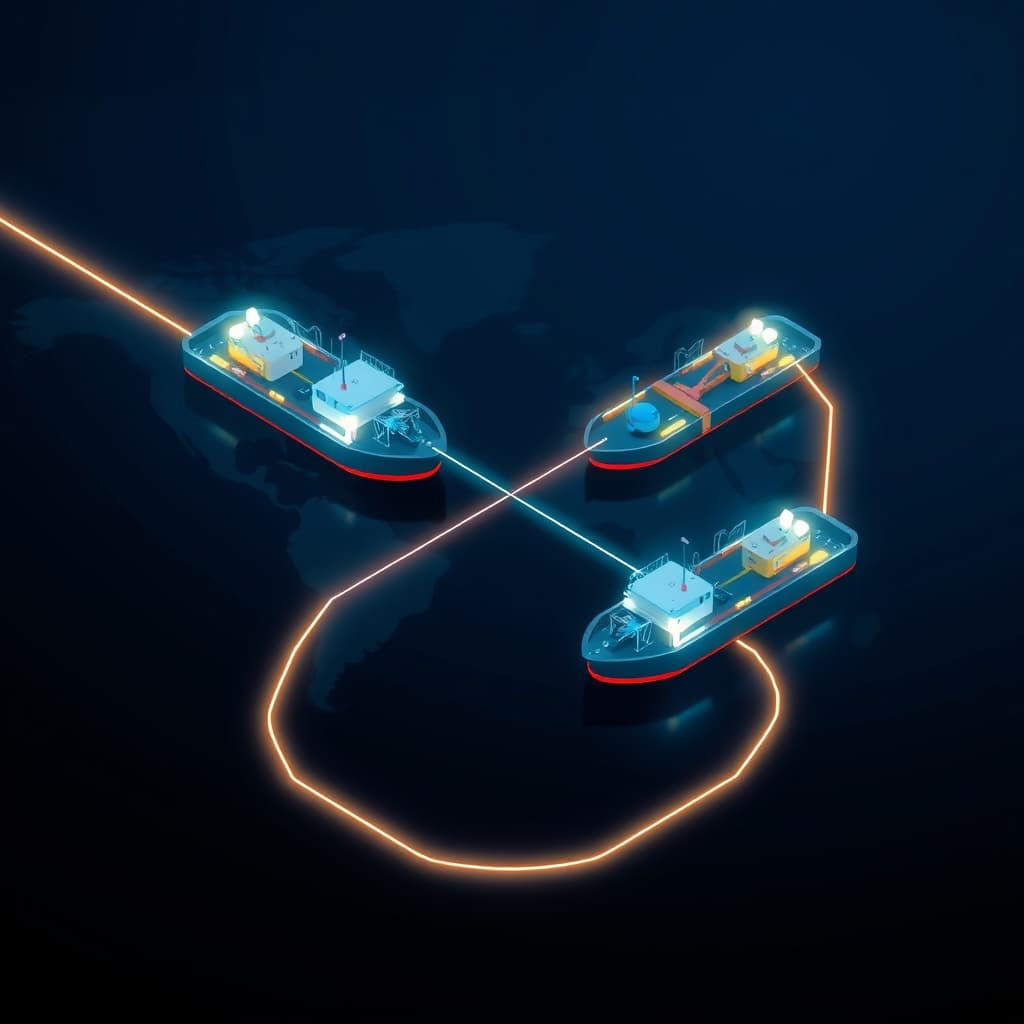
In December 2025, the U.S. seizure of the stateless tanker Skipper marked a structural break in maritime enforcement: authorities shifted from passively monitoring dark fleet activity to executing physical interdictions on the high seas. As an industrial analyst who has modeled global supply chain risk and maritime logistics for over fifteen years, I rely on a strictly risk-adjusted framework to evaluate how geopolitical chokepoints dictate commodity flows. The strategic calculus of global crude transport is rewriting itself in real-time. We examine the mechanics of shadow maritime energy routing, detailing how restricted access through critical waterways is permanently splitting global commodity pricing into a bifurcated system based on political alignment.
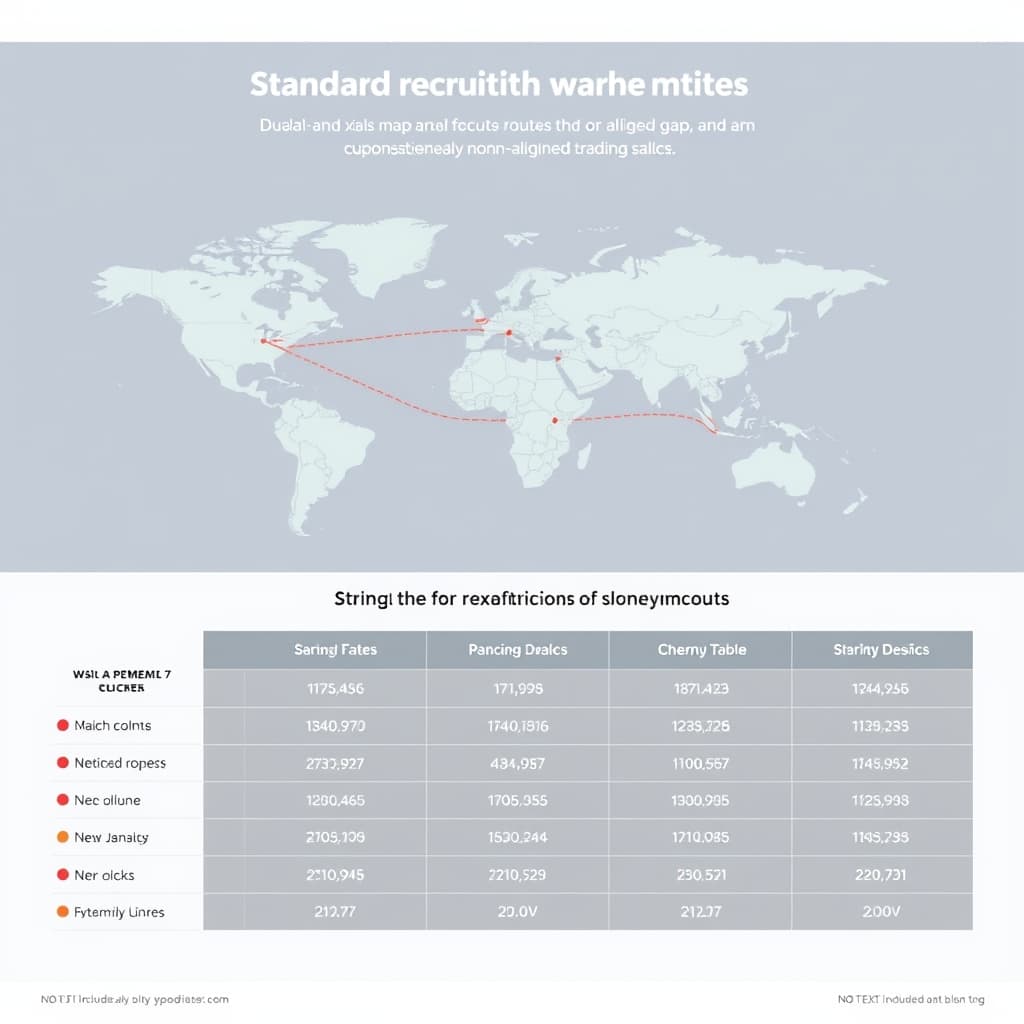
The Strait of Hormuz, historically responsible for processing roughly 20 million barrels of oil per day, no longer functions as a neutral transit corridor. Geopolitical tensions have transformed this critical waterway into a gated checkpoint. Access is now implicitly dictated by political alignment rather than international maritime law. Nations lacking diplomatic leverage or strategic alignment with the region's dominant powers face prohibitive risks, forcing their flagged vessels to reroute or anchor indefinitely. This weaponization obliterates the foundational premise of free maritime trade, replacing it with a system where safe passage requires explicit geopolitical concessions.
While Western fleets navigate blockades and elevated threat levels, politically aligned nations enjoy uninterrupted, preferential access. By March 2026, roughly half of all oil tankers and gas carriers over 10,000 deadweight tons moving through the Strait of Hormuz were identified as shadow fleet vessels. These corridors allow nations like China to secure vital energy inputs without the friction of military interception. The strategic advantage is twofold: aligned economies guarantee their domestic energy security while simultaneously acquiring crude at steep discounts off standard international benchmarks, creating an unbridgeable competitive moat for their manufacturing sectors.
The fracturing of transit routes has manifested as a permanent divergence in commodity pricing. We no longer operate under a unified global oil market. Instead, pricing is dictated by the buyer's geopolitical standing and their ability to access shadow logistics networks.
This structural gap fundamentally alters the cost of production for heavy industries globally. When one bloc consistently procures energy 20% cheaper than its competitors, the downstream effects permanently reshape global trade balances.
For non-aligned fleets attempting to navigate high-risk zones, the financial barrier to entry has become insurmountable. Tier-1 maritime insurers within the International Group of P&I Clubs have largely withdrawn standard coverage for vessels transiting contested waters. Those that remain impose exorbitant war-risk premiums that can exceed 5% of the vessel's hull value per transit. Consequently, freight rates for standard commercial tankers have decoupled from actual voyage distances, reflecting instead the extreme financial liability of operating within the crosshairs of regional conflicts.
The operational backbone of this shadow market relies on sophisticated digital deception. The U.S. Office of Foreign Assets Control (OFAC) explicitly warned the maritime sector about these deceptive practices, highlighting the shadow fleet's reliance on opaque ownership, falsified documents, and multi-leg ship-to-ship (STS) transfers to obscure origin trails.
Mini Case Study: The Seizure of the Skipper In late 2025, U.S. authorities seized the tanker Skipper, a vessel broadcasting an expired Guyana flag, effectively rendering it stateless. The vessel engaged in advanced Automatic Identification System (AIS) spoofing, transmitting a false location hundreds of miles away from its actual position. Data analytics firm Kpler revealed that 80.1% of ships caught spoofing their AIS are sanctioned within a year, making digital deception the most reliable leading indicator of regulatory enforcement. The International Maritime Organization (IMO) previously condemned these practices in Resolution A.1192(33), noting the severe risks they pose to maritime safety and liability frameworks.
Shadow maritime routing cannot function within the traditional US dollar-dominated financial system. To bypass Western clearinghouses, participants in the dark fleet economy have accelerated the adoption of alternative settlement mechanisms. Transactions are increasingly settled in yuan, rubles, or through decentralized digital ledgers that leave no footprint in the SWIFT network. This financial isolation insulates the shadow market from traditional economic statecraft, rendering Western sanctions increasingly ineffective against motivated, well-capitalized adversaries.
Routing around geopolitical chokepoints—such as bypassing the Suez Canal and the Strait of Hormuz in favor of the Cape of Good Hope—adds weeks to transit times and millions in fuel costs per voyage. These are not temporary spikes; they are permanent structural costs embedded into the Western supply chain. The resulting inflationary pressure cascades through every sector, from petrochemicals to retail goods, forcing central banks to maintain restrictive monetary policies far longer than historical models would dictate.
The realization that maritime chokepoints are permanently compromised is forcing a massive reallocation of institutional capital. Western economies are rapidly pivoting investments away from Middle Eastern extraction projects and channeling hundreds of billions into domestic energy security. This includes accelerating the deployment of offshore wind, expanding localized nuclear baseload, and heavily subsidizing Atlantic basin oil and gas production to eliminate reliance on hostile transit corridors.
To mitigate the existential risk of maritime interdiction, state actors are fast-tracking the development of transnational overland pipelines. By bypassing the sea entirely, these infrastructure megaprojects aim to connect landlocked extraction sites directly to allied industrial hubs. While capital-intensive and slow to deploy, these pipelines represent the only viable strategy to immunize national energy grids against the volatility of the naval domain.
The maritime intelligence sector is undergoing a technological renaissance to combat AIS spoofing. Supply chain managers and military planners are deploying low-earth orbit synthetic aperture radar (SAR) and radio frequency (RF) analytics to physically track dark fleet vessels regardless of their digital emissions.
My operational thesis rests on one falsifiable claim: By Q4 2027, over 40% of all seaborne crude bound for G7 economies will bypass the Middle East entirely, relying instead on Atlantic Basin production and localized pipelines. Indicators that would confirm or refute this trajectory include:
To maintain intellectual rigor, I constantly stress-test this thesis. What would change my mind about the permanence of this bifurcated market? A comprehensive, verifiable diplomatic normalization between Washington, Tehran, and Moscow that dismantles the underlying sanctions architecture. If tier-1 maritime insurers return to underwriting Persian Gulf transits without exorbitant war-risk premiums, and if the shadow fleet's share of global tonnage drops below 5% for three consecutive quarters, the economic incentive for shadow routing would collapse. Until those specific metrics materialize, the fractured market remains the baseline reality.
The era of uniform global oil pricing has ended. Market participants must now treat geopolitical alignment as a fundamental variable in energy procurement, fundamentally altering the calculus for institutional investors and global supply chain managers. Navigating this environment requires abandoning legacy models of frictionless trade and adapting to a reality where the map itself is a contested asset.
How does restricted transit through the Strait of Hormuz affect global oil benchmarks? Restricted transit fractures traditional benchmarks like Brent and WTI, creating regional price disparities where politically aligned nations secure crude at steep discounts while non-aligned nations face elevated premiums due to rerouting and heightened insurance costs.
What defines a shadow fleet in the context of maritime energy routing? A shadow fleet consists of aging tankers operating outside standard regulatory frameworks, frequently disabling Automatic Identification Systems (AIS) and relying on opaque insurance markets to transport crude for sanctioned or restricted regimes.