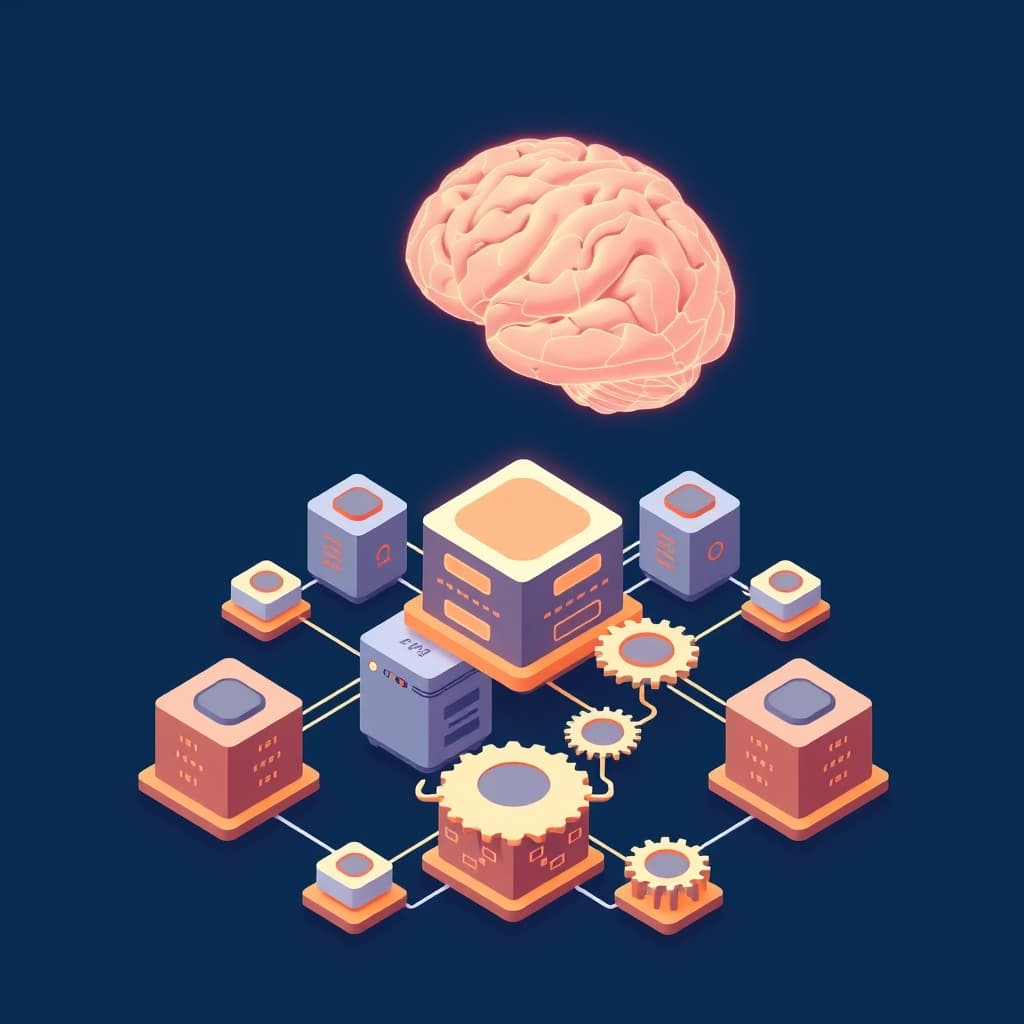
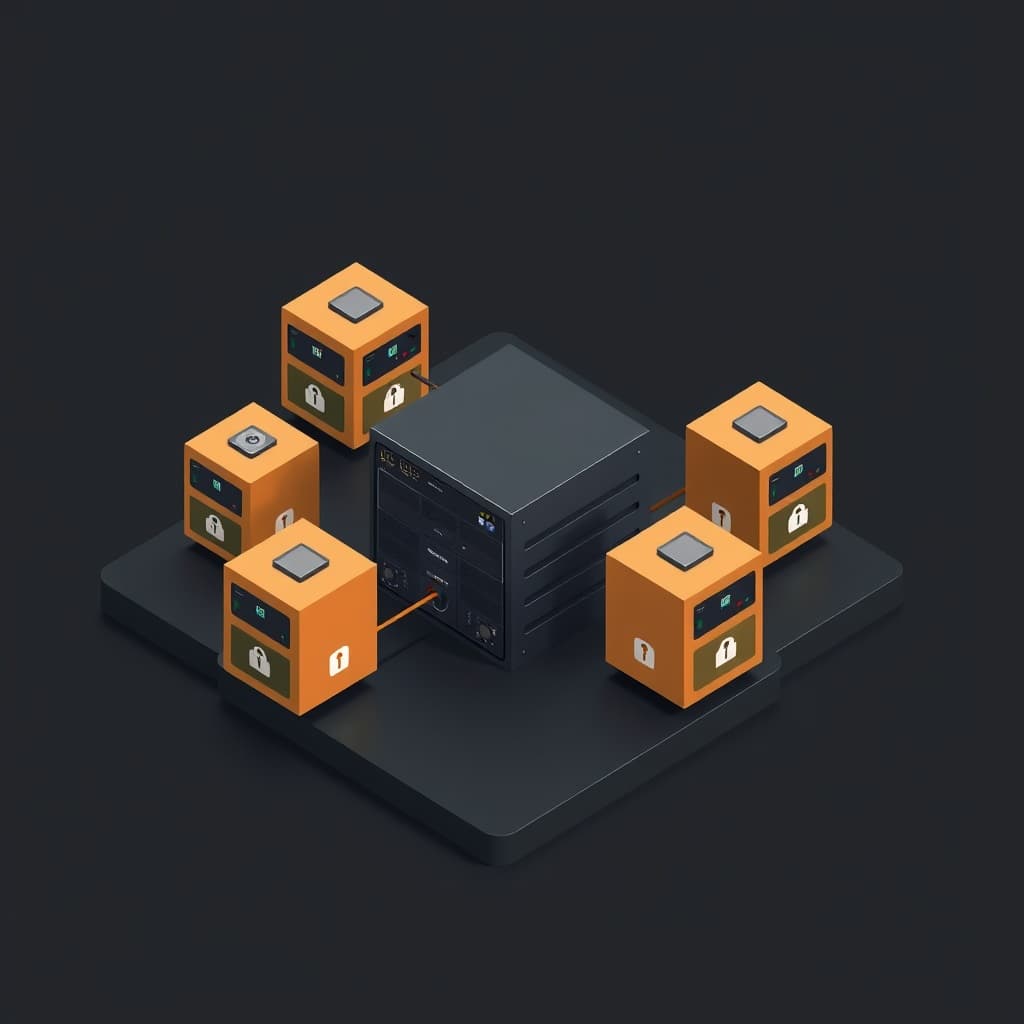
Strategic Repository Decoupling: Why AI Titans Are Abandoning GitHub
.git folder is structurally incapable of handling the future of artificial intelligence. When a repository’s primary asset shifts from ASCII text files to terabyte-scale model weights, the distributed version control systems (DVCS) that defined the last decade of software engineering collapse under their own metadata.This technical bottleneck, combined with an existential corporate risk, has birthed a new architectural discipline: Strategic Repository Decoupling.
We are witnessing a silent migration. The world’s most valuable intellectual property is leaving the public cloud. OpenAI, Anthropic, and X.AI are not merely "scaling up"; they are actively retreating from the multi-tenant convenience of GitHub and GitLab SaaS to build digital fortresses. This is not simple housekeeping. It is a calculated repudiation of the "social coding" ethos for Tier-1 assets, driven by the realization that building your extinction-level algorithm on a competitor's server is a strategic suicide pact.
The Risk Matrix: Commercial SaaS vs. Sovereign Stacks
The decision to decouple is rarely emotional; it is a quantitative assessment of exposure. The following matrix illustrates the architectural trade-offs driving Chief Technology Officers at AI labs to abandon standard SaaS repositories.
The OpenAI Paradox: Innovation on a Competitor's Lease
The relationship between OpenAI and Microsoft is the defining architectural tension of our time. While the partnership has fueled the generative AI boom, it presents an untenable long-term paradox: OpenAI hosts the blueprints for its flagship product (GPT-4 and beyond) on infrastructure owned by its primary investor—who is also rapidly becoming its primary rival.
The Friction Between Partnership and Dependency
Hosting GPT-5’s architecture on GitHub (owned by Microsoft) creates a "glass house" scenario. While source code is encrypted at rest, the operational metadata provides Microsoft with unprecedented insight into OpenAI's development velocity. Every pull request, every CI/CD pipeline failure, and every burst of commit activity signals a roadmap milestone.
For a Principal Engineer, this is a failure of separation of concerns. You do not store the keys to the castle in the landlord's safe. Strategic Repository Decoupling solves this by moving core training logic and model architecture to air-gapped, internal version control systems. This ensures that while the runtime may happen on Azure, the intellectual history of the model remains sovereign.
The "Bus Factor" of Centralized Platforms
Beyond corporate espionage, there is the issue of platform resilience. Relying on a single SaaS provider for the repository, CI/CD, and issue tracking creates a single point of failure. If GitHub suffers a global outage (as it has), the development velocity of the dependent AI firm drops to zero. Decoupling involves building redundant, self-hosted Git instances (or non-Git alternatives) that allow engineering to continue regardless of the public cloud's status.
Intellectual Property Sovereignty and the Leakage Vector
Standard enterprise encryption is insufficient for trillion-dollar algorithms because it protects the content but exposes the intent.
Eliminating Metadata Leakage
inference-engine submodule, they can deduce your strategic pivot before you announce it.SaaS platforms inherently collect this telemetry to "improve service." By moving to a sovereign stack, organizations eliminate this leakage vector. They regain control over the "development signature"—the patterns of work that reveal what is being built, how fast, and by whom.
The Problem with "Private" Repositories
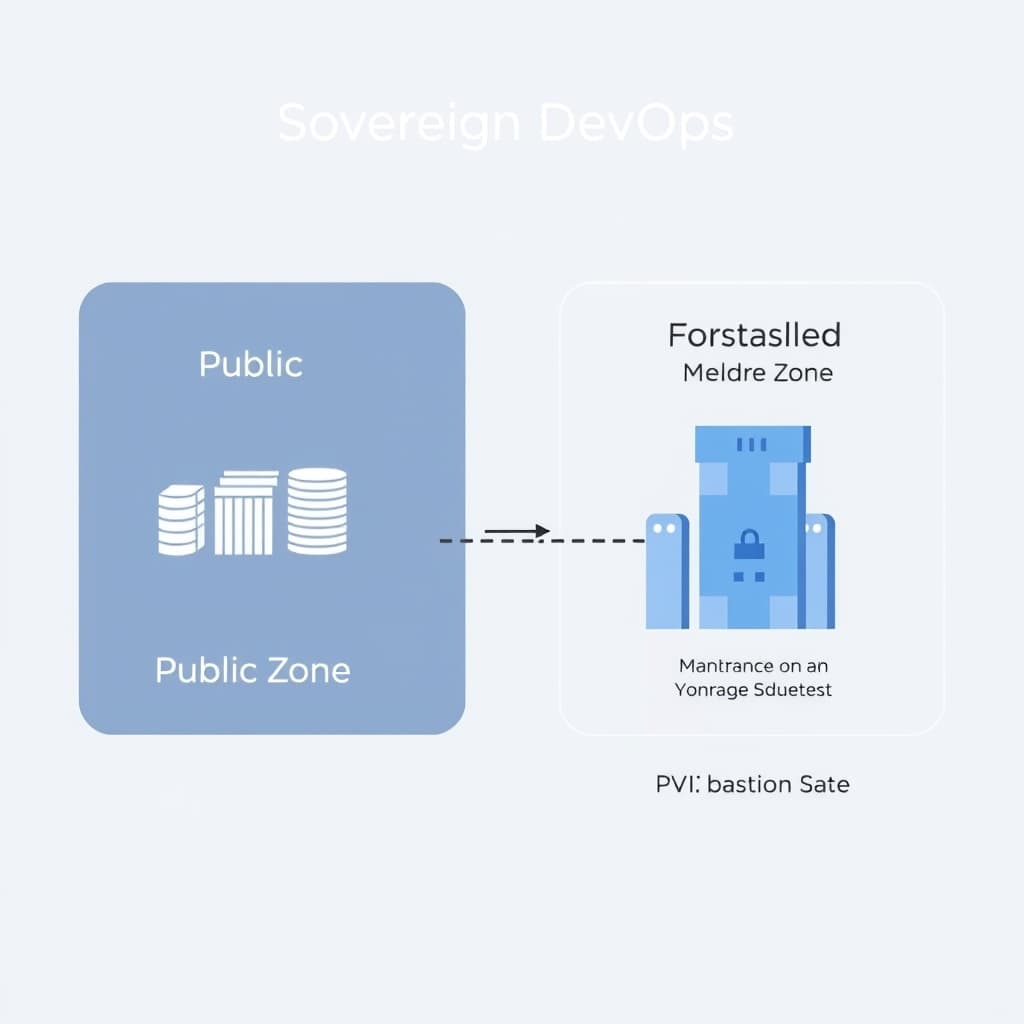
A "private" repository on a public cloud is a legal construct, not a physical one. It exists on shared hardware, managed by third-party administrators. For standard web apps, this risk is negligible. For Artificial General Intelligence (AGI) candidates, where a single leaked weight file could democratize a weaponizable capability, the risk is catastrophic. Strategic Repository Decoupling mandates that the storage medium itself be physically or logically isolated from the public internet, accessible only via secure, hardware-authenticated tunnels.
Architecting Post-SaaS Infrastructure for Large Models
Git was designed by Linus Torvalds to manage the Linux kernel—a collection of text files. It was never intended to version control petabytes of floating-point numbers.
Overcoming Git's Binary Limitations
The "Git LFS" (Large File Storage) extension is a patch, not a cure. It replaces large files with text pointers, storing the actual blobs elsewhere. However, at the scale of modern AI, this breaks down. Cloning a repo with 500TB of historical model weights is operationally impossible over standard HTTPS.
Engineers are now architecting bespoke version control systems that look less like Git and more like content-addressable file systems. These systems treat model weights as first-class citizens, using block-level deduplication and p2p distribution protocols (similar to BitTorrent) to move data between training clusters. The repository is the infrastructure.
Bespoke CI/CD Pipelines
When you decouple the repository, you lose the convenience of GitHub Actions. This forces the creation of bespoke CI/CD pipelines that never touch the public internet. These pipelines run on internal Kubernetes clusters, performing safety evaluations and regression tests on models in a completely hermetic environment. The trade-off is high maintenance overhead; the reward is a pipeline that cannot be snooped, throttled, or sanctioned by a third-party provider.
The Return of the Walled Garden: DevOps Markets in 2026
We are observing the pendulum swing back from "Open Collaboration" to "Defensive Isolation."
The Decline of Monolithic Platforms
By 2026, the dominance of monolithic DevOps platforms will erode for Tier-1 tech companies. We will see a bifurcation of the market:
- Commodity Software: Remains on GitHub/GitLab.
- Crown Jewel IP: Moves to "Sovereign DevOps" suites—highly expensive, on-premise, or single-tenant solutions designed for defense contractors, fintech, and AI labs.
The Rise of Sovereign DevOps Tools
New tooling will emerge to support this air-gapped reality. Expect to see "Git-compatible" interfaces that backend into high-performance object storage, offering the developer experience of GitHub but the security profile of a cold-storage vault. These tools will prioritize auditability over sociability. The "Star" button will be replaced by the "Chain of Custody" log.
Signature Prediction
Here is the falsifiable claim for this architectural shift:
By Q4 2027, at least one of the "Magnificent Seven" tech companies will acquire a legacy version control or storage firm (e.g., Perforce or a major data governance player) specifically to launch a "Black Box" repository service that legally guarantees zero platform-side telemetry. Watch for these indicators:- Indicator 1: GitHub or GitLab changing Terms of Service to explicitly claim rights to train AI on private repository code (provoking the exodus).
- Indicator 2: A surge in job postings at OpenAI/Anthropic for "Internal Tools" engineers with specific experience in file systems and distributed storage.
- Indicator 3: The release of an open-source "Git alternative" optimized for tensors by a major AI lab.
The Final Commit
The move to internal repositories is a declaration of independence. As AI models transition from software curiosities to the world's most valuable assets, the walls around them will inevitably rise. The era of open collaboration for core IP is ending; the era of the digital fortress has begun.
FAQ
Is Strategic Repository Decoupling just for AI companies? While currently led by AI firms due to high IP value and binary file sizes, the fintech and defense sectors are rapidly adopting similar sovereign infrastructure strategies. Any organization where the codebase is the product (and is uniquely valuable) is a candidate for decoupling.
Does this mean OpenAI is stopping open source contributions? Not necessarily. This strategy bifurcates their code: public libraries, SDKs, and evaluation frameworks remain on GitHub for community engagement, while the core revenue-generating logic and model weights move to the internal fortress.
Sources
Related
View all →