


The 467% Surge: How Autonomous Agentic AI is Rewriting Enterprise Software Economics
The 467% Surge: How Autonomous Agentic AI is Rewriting Enterprise Software Economics
Enterprise technology leaders face an immediate, existential capital allocation risk: continuing to renew legacy seat-based software licenses while competitors transition to autonomous, consumption-based AI architectures. With enterprise autonomous AI agent deployments skyrocketing by 467% over the last 18 months, the fundamental unit of corporate productivity is shifting from human-operated interfaces to independent machine execution. Drawing on 15 years of venture capital diligence and large-scale distributed systems engineering, I will analyze this structural upheaval through the frameworks of unit economics and system architecture. We will examine the technical leap from reactive prompt-response models to proactive task execution, evaluate the margin compression threatening legacy software providers, and dissect the platform rebuilds currently underway at major cloud infrastructure providers like Oracle.
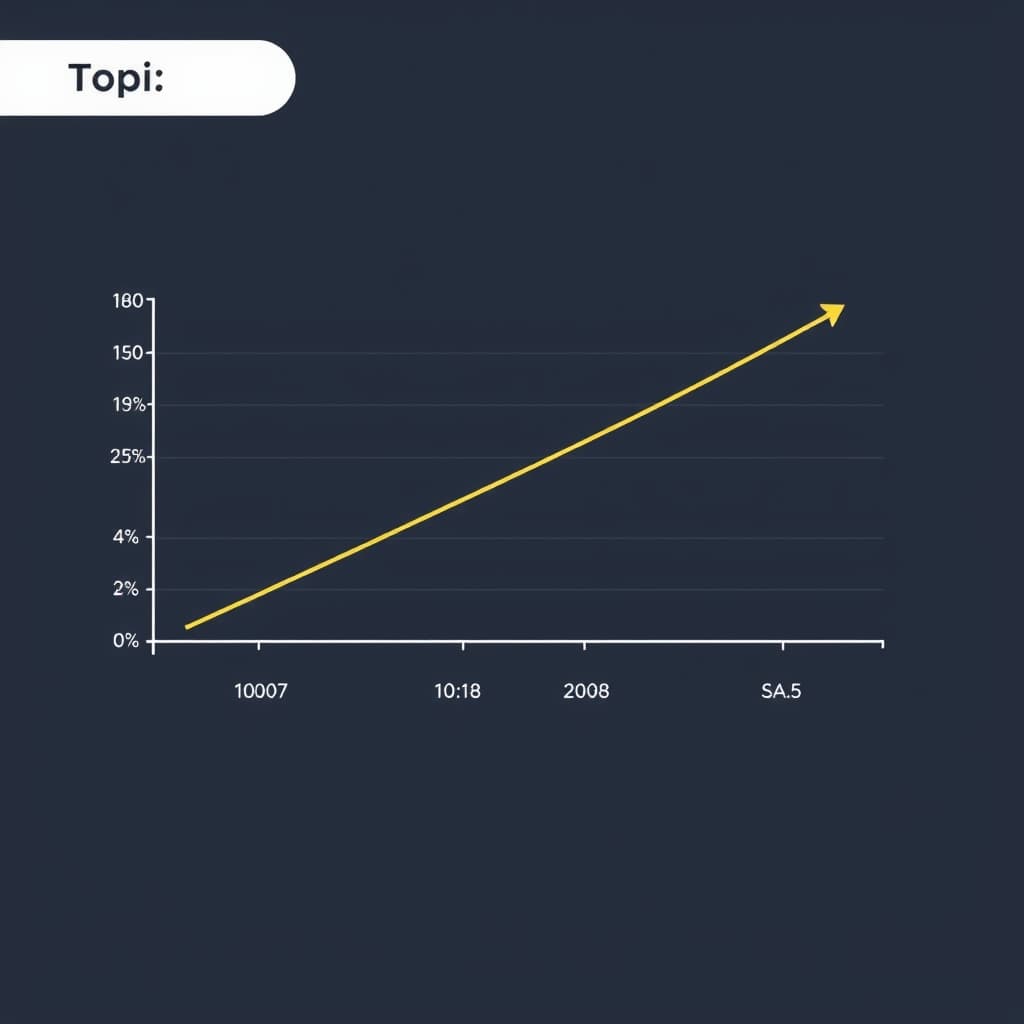
Beyond Copilots: The Architecture of Autonomous Decision-Making
Transitioning from Reactive Prompts to Proactive Task Execution
First-generation generative AI functioned as a stochastic parrot on demand—requiring a human operator to initiate a prompt, evaluate the output, and manually apply the result. Agentic AI fundamentally alters this execution loop. By wrapping large language models (LLMs) in scaffolding that supports planning, tool use, and reflection, agents operate asynchronously. They receive a high-level objective, decompose it into a directed acyclic graph (DAG) of sub-tasks, and execute them against external APIs.
This architectural shift from stateless text generation to stateful, loop-driven execution introduces severe latency and compute constraints. An agent resolving a supply chain anomaly might execute 50 distinct database queries and API calls before surfacing a resolution. The second-order effect is a massive, unforeseen spike in backend read/write operations, forcing infrastructure teams to provision higher-throughput database tiers simply to handle continuous machine-to-machine polling.
State Management and Memory in Multi-Agent Ecosystems
Autonomy requires context. Unlike isolated chatbots, enterprise agents must maintain episodic memory (past actions and outcomes) and semantic memory (domain knowledge). Engineers are increasingly relying on vector databases and unified memory cores to persist agent state.
When multiple specialized agents collaborate—such as a data retrieval agent passing context to a code generation agent—state synchronization becomes a distributed systems challenge. If an agent loses context mid-execution due to a token-limit truncation or an unhandled exception in the scratchpad memory, the entire workflow fails. Robust multi-agent ecosystems require dedicated control planes to manage state rollbacks, context sharing, and fault tolerance across distributed runtimes.
The Collapse of the Per-Seat SaaS Pricing Paradigm
Why Agentic AI Forces a Shift to Outcome-Based Billing
The economic foundation of enterprise software for the past two decades has been the per-user subscription. This model fractures when a single autonomous agent can execute the workload of a hundred human operators. If a company replaces 50 customer support representatives with a fleet of autonomous agents, they will not pay 50 software licenses to their helpdesk provider. Consequently, software vendors are being forced to pivot toward consumption-based pricing (billing per API call or compute second) or outcome-based billing (charging a percentage of revenue recovered or tickets resolved).
Margin Compression and the Threat to Legacy Software Providers
Legacy SaaS vendors that rely on "shelfware"—licenses paid for but rarely used—face severe margin compression. Autonomous agents are highly efficient; they do not let licenses sit idle. They consume compute relentlessly. Vendors locked into flat-rate pricing models will see their infrastructure costs skyrocket as agents constantly ping their APIs, while their top-line revenue remains stagnant.
Platform Rebuilds at the Cloud Edge: Oracle and JetBrains
Oracle’s Agent-Centric Cloud Suite Overhaul
The transition to agentic architectures is not a theoretical future state; it is actively rewriting the codebases of tier-one enterprise vendors. In March 2026, Oracle fundamentally restructured its Fusion Cloud Applications, introducing Fusion Agentic Applications. Rather than bolting a chat interface onto legacy databases, Oracle embedded agents directly into the transactional layer.
By utilizing the Oracle AI Database Private Agent Factory, organizations deploy agents that possess native access to enterprise data, bypassing the need for vulnerable, complex extraction pipelines. This architectural choice embeds governance directly into the data layer, ensuring agents respect existing approval hierarchies and role-based access controls during multi-step business process automation.
JetBrains and the New Infrastructure for Autonomous Coders
Similarly, the software development lifecycle is being rebuilt around machine execution. JetBrains recently launched JetBrains Central, an agentic development platform designed to orchestrate fleets of AI coding agents like Junie. Recognizing that code generation is no longer the bottleneck, JetBrains shifted focus to the control and execution plane.
The platform manages identity, policy enforcement, and shared semantic context across repositories. This is a critical case study in enterprise adaptation: JetBrains recognized that unmanaged agents running locally create fragmented, untraceable codebases. By centralizing the execution infrastructure, they provide the observability and auditability required by enterprise risk and compliance teams.
Orchestrating the Chaos: Security and Governance in Agentic Workflows
Containing Rogue Agents and Hallucinated Commands
Granting an LLM the ability to read data is a compliance risk; granting it the ability to write data or execute financial transactions is an existential threat. The primary vulnerability in agentic systems is indirect prompt injection leading to unauthorized execution. If an agent is parsing an external email that contains a malicious payload instructing it to forward sensitive documents or drop a database table, a naive system will comply. Engineers must implement strict bounded execution environments. High-risk actions must require deterministic, human-in-the-loop cryptographic signing before execution.
Identity Access Management (IAM) for Non-Human Actors
Traditional IAM frameworks were built for human employees with predictable working hours and static IP ranges. Agentic workflows require dynamic, short-lived credentialing.
Enterprises must treat agents as highly privileged service accounts, utilizing zero-trust architectures where every API call is authenticated, authorized, and logged immutably.
The Next Five Years: Hyper-Automation and the Autonomous Enterprise
Cross-Platform Agent Interoperability Standards
As we look toward the remainder of the decade, the fragmentation of agent ecosystems will become the primary friction point for enterprise IT. An agent provisioned in Salesforce must be able to negotiate tasks securely with an agent running in an Oracle database or an Atlassian workspace. This necessity is driving the rapid adoption of open standards like the Model Context Protocol (MCP). Interoperability will shift from a competitive advantage to a baseline procurement requirement.
The Evolving Role of the CIO in Managing Agent Fleets
The Chief Information Officer’s mandate is transforming from managing software deployments to governing autonomous compute fleets. By 2026 and beyond, IT leadership will focus on inference routing—dynamically directing agent tasks to the most cost-effective foundation models based on latency, cost, and complexity requirements. The CIO will act less like a traditional IT manager and more like a grid operator, balancing compute loads and managing the economic trade-offs of machine intelligence.
Falsifiable Claim: By Q4 2027, the majority of Fortune 500 enterprise software RFPs will explicitly require native Model Context Protocol (MCP) or equivalent agentic interoperability standards, directly penalizing closed-ecosystem SaaS vendors. This claim can be confirmed or refuted by observing the following indicators:
- A measurable decline in net revenue retention (NRR) for traditional SaaS companies lacking exposed API orchestration layers.
- At least three major cloud providers formally standardizing on a unified agent communication protocol by mid-2027.
- Enterprise IT budgets reallocating more than 30% of their application spend from static seat licenses to foundational model API consumption.
If API inference costs hit a hard floor due to raw compute constraints or regional power grid limitations, the unit economics of autonomous agents will break. An extended GPU shortage or strict regulatory caps on data center energy consumption would force enterprises back into human-in-the-loop workflows, making legacy seat-based software economically viable for a significantly longer horizon.
Conclusion
The pivot to agentic AI represents a fundamental rewiring of enterprise value creation. Organizations must immediately audit their existing software dependencies and prepare their cloud infrastructure for autonomous orchestration, or risk being outmaneuvered by faster, agent-driven competitors.
FAQ
How does agentic AI differ from traditional generative AI copilots?
While generative AI copilots assist human operators by drafting content or suggesting code, agentic AI operates autonomously. It plans multi-step workflows, interacts directly with external APIs, and executes complex decisions without requiring human-in-the-loop validation for every sequential step.
What are the primary security risks when integrating autonomous agents into enterprise networks?
The most critical vulnerabilities involve privilege escalation and unauthorized execution. If an agent is granted write-access to core databases, a corrupted prompt or logic error can result in mass data deletion or unauthorized financial transactions. Robust sandboxing, strict IAM controls, and bounded execution environments are mandatory.
Sources
- Oracle Unveils AI Database Agentic Innovations for Business Data
- JetBrains Central: An Open System for Agentic Software Development
- Model Context Protocol (MCP) Official Documentation
- Federal Reserve Economic Data (FRED) - Software Investment Trends
- European Securities and Markets Authority (ESMA) - AI Governance
Related
View all →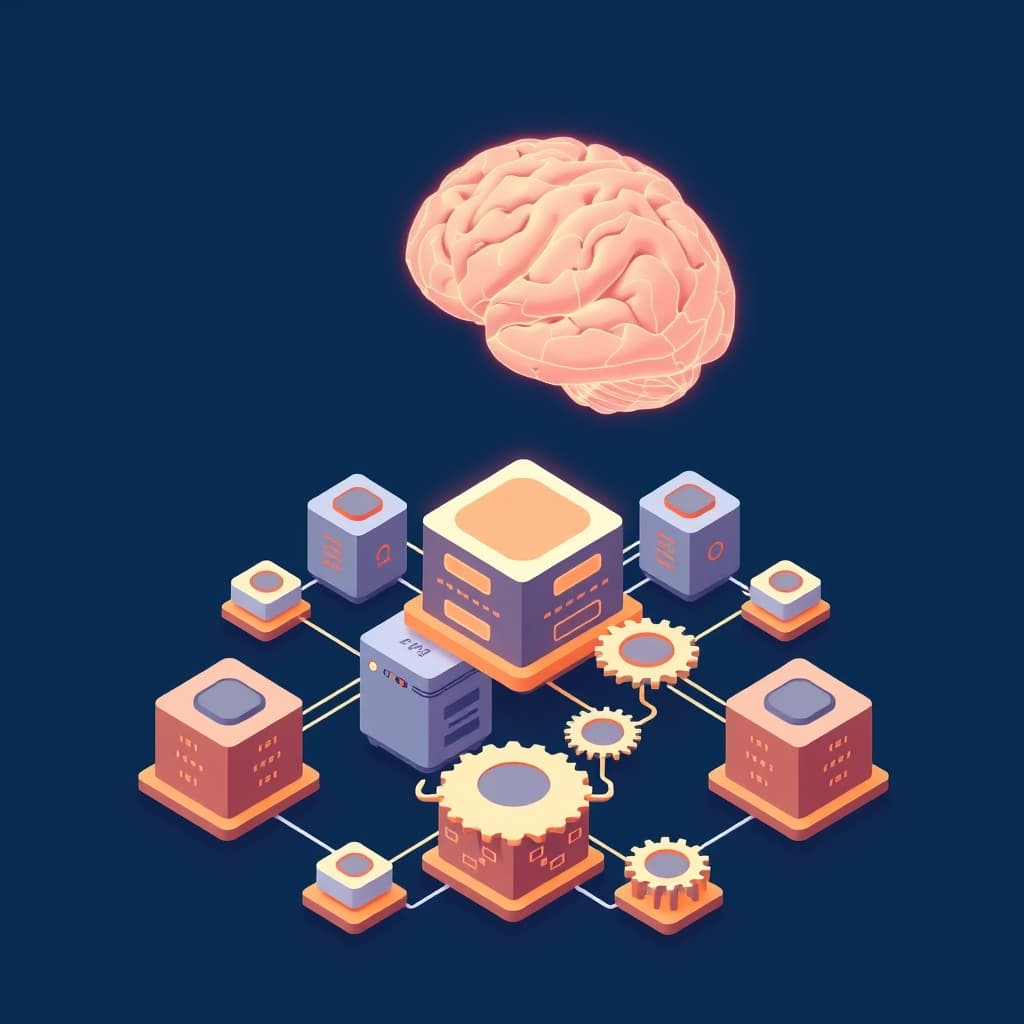

IT
The $3 Trillion Refactor: How GenAI Agents Are Finally Cracking the COBOL Code
February 25, 2026
...